

Can a metal heat exchanger be used in high - temperature environments?
As a trusted supplier of metal heat exchangers, I often encounter inquiries from customers about the suitability of our products for high - temperature environments. This blog aims to comprehensively explore whether metal heat exchangers can be effectively used in such challenging conditions.
Understanding High - Temperature Environments
Before delving into the capabilities of metal heat exchangers, it's essential to define what a high - temperature environment is. Generally, high - temperature environments can be classified as those where the operating temperature exceeds 500°C. These conditions are commonly found in industrial processes such as power generation, petrochemical refining, and metal smelting. In these industries, heat exchangers play a crucial role in transferring heat between different fluids, either to recover waste heat or to control the temperature of a process.
Properties of Metals for Heat Exchangers
Metals are widely used in heat exchangers due to their excellent thermal conductivity. Some of the common metals used in heat exchanger construction include carbon steel, stainless steel, and titanium. Each metal has its own set of properties that determine its suitability for high - temperature applications.
Carbon steel is a popular choice for heat exchangers due to its relatively low cost and good mechanical properties. However, its performance at high temperatures is limited. At temperatures above 400°C, carbon steel can undergo a process called graphitization, where the carbon in the steel forms graphite, leading to a reduction in its strength and ductility. Despite these limitations, carbon steel heat exchangers can still be used in some high - temperature applications with proper design and operating conditions. For more information on carbon steel heat exchangers, you can visit Carbon Steel Heat Exchanger.
Stainless steel, on the other hand, offers better high - temperature performance compared to carbon steel. Stainless steel contains chromium, which forms a protective oxide layer on the surface of the metal, preventing corrosion and oxidation at high temperatures. Grade 304 stainless steel is commonly used in heat exchanger applications. The 304 Spiral Wound Shell and Tube Heat Exchanger and 304 Plate Heat Exchanger are two examples of heat exchangers made from 304 stainless steel that can withstand relatively high temperatures.
Titanium is another metal that is suitable for high - temperature environments. It has a high strength - to - weight ratio and excellent corrosion resistance. Titanium heat exchangers are often used in applications where the fluid being processed is highly corrosive, such as in the chemical and pharmaceutical industries.
Design Considerations for High - Temperature Metal Heat Exchangers
When designing a metal heat exchanger for high - temperature environments, several factors need to be taken into account.
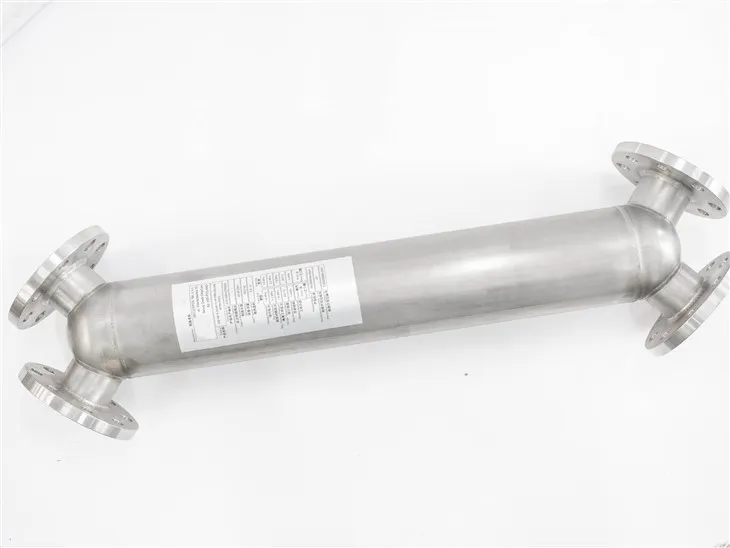

Material Selection: As mentioned earlier, the choice of material is crucial. The material should have good thermal conductivity, high strength, and resistance to corrosion and oxidation at the operating temperature.
Thermal Expansion: Metals expand when heated, and this expansion needs to be accommodated in the design of the heat exchanger. If the expansion is not properly accounted for, it can lead to stress concentrations, which may cause the heat exchanger to fail.
Insulation: Insulation is important to reduce heat loss from the heat exchanger and to protect the surrounding environment from high temperatures. Proper insulation can also improve the energy efficiency of the heat exchanger.
Flow Design: The flow design of the heat exchanger should be optimized to ensure efficient heat transfer. This includes considerations such as the flow rate, flow direction, and the arrangement of the tubes or plates.
Case Studies of Metal Heat Exchangers in High - Temperature Environments
Let's look at some real - world examples of metal heat exchangers being used in high - temperature environments.
In a power generation plant, a carbon steel heat exchanger is used to pre - heat the feedwater before it enters the boiler. The heat exchanger operates at a temperature of around 300°C. Although carbon steel is not ideal for extremely high temperatures, in this case, the design and operating conditions are carefully controlled to ensure the long - term performance of the heat exchanger.
In a petrochemical refinery, a 304 stainless steel shell and tube heat exchanger is used to cool the hot process fluid. The heat exchanger operates at a temperature of up to 450°C. The stainless steel material provides good corrosion resistance and high - temperature strength, ensuring reliable operation in this harsh environment.
Limitations and Challenges
While metal heat exchangers can be used in high - temperature environments, there are still some limitations and challenges.
Cost: High - performance metals such as titanium and some specialized stainless steels can be expensive, which may increase the overall cost of the heat exchanger.
Maintenance: High - temperature operation can accelerate the wear and tear of the heat exchanger, requiring more frequent maintenance and inspection.
Compatibility: The fluid being processed in the heat exchanger may be incompatible with the metal material at high temperatures, leading to corrosion or other forms of degradation.
Conclusion
In conclusion, metal heat exchangers can be used in high - temperature environments, but careful consideration needs to be given to material selection, design, and operating conditions. With the right approach, metal heat exchangers can provide reliable and efficient heat transfer in a wide range of high - temperature applications.
If you are in need of a metal heat exchanger for a high - temperature environment, we are here to help. Our team of experts can work with you to select the most suitable heat exchanger for your specific requirements. Contact us to start a discussion about your project and explore the best solutions for your heat transfer needs.
References
- Incropera, F. P., DeWitt, D. P., Bergman, T. L., & Lavine, A. S. (2007). Fundamentals of Heat and Mass Transfer. John Wiley & Sons.
- Green, D. W., & Perry, R. H. (2007). Perry's Chemical Engineers' Handbook. McGraw - Hill.