

Sizing a 304 plate heat exchanger for a district heating system is a critical task that requires careful consideration of multiple factors. As a 304 Plate Heat Exchanger supplier, I have witnessed firsthand the importance of accurate sizing to ensure the efficient and reliable operation of district heating systems. In this blog, I will share some insights on how to properly size a 304 plate heat exchanger for such applications.
Understanding the Basics of a 304 Plate Heat Exchanger
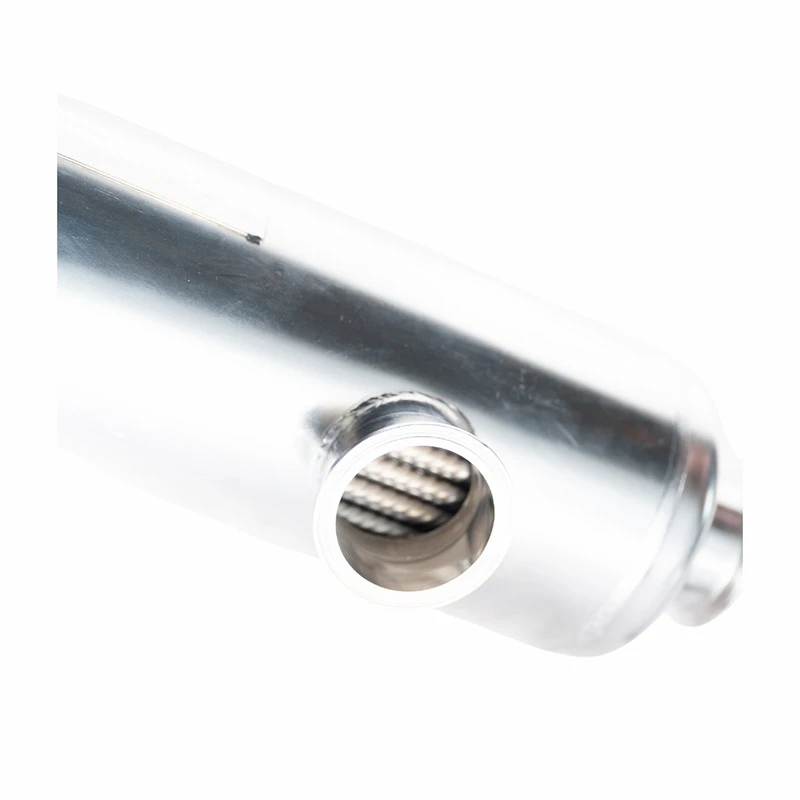
A 304 plate heat exchanger is a type of heat exchanger that uses corrugated plates to transfer heat between two fluids. The 304 refers to the grade of stainless steel used in the construction of the plates, which offers excellent corrosion resistance and durability. Plate heat exchangers are known for their high efficiency, compact design, and easy maintenance, making them a popular choice for district heating systems.
Key Factors in Sizing a 304 Plate Heat Exchanger
1. Heat Load Calculation
The first step in sizing a 304 plate heat exchanger is to calculate the heat load of the district heating system. The heat load is the amount of heat energy required to maintain the desired temperature in the buildings or areas being heated. It is typically measured in kilowatts (kW) or British thermal units per hour (BTU/h).
To calculate the heat load, you need to consider several factors, including the size of the heated area, the insulation level of the buildings, the outdoor design temperature, and the desired indoor temperature. You can use standard heat load calculation methods or software tools to determine the heat load accurately.
2. Fluid Flow Rates
The flow rates of the hot and cold fluids in the district heating system are also crucial for sizing the heat exchanger. The flow rates determine the amount of heat that can be transferred between the two fluids. You need to know the flow rates of the primary (hot) and secondary (cold) fluids, which are usually provided by the system design or determined based on the heat load requirements.
The flow rates should be measured in cubic meters per hour (m³/h) or gallons per minute (GPM). It is important to ensure that the heat exchanger can handle the required flow rates without excessive pressure drops, which can affect the system's efficiency and performance.
3. Temperature Difference
The temperature difference between the hot and cold fluids is another important factor in sizing a 304 plate heat exchanger. The greater the temperature difference, the more heat can be transferred. You need to know the inlet and outlet temperatures of both the primary and secondary fluids.

The temperature difference is typically expressed as the logarithmic mean temperature difference (LMTD), which takes into account the changing temperature along the length of the heat exchanger. The LMTD is calculated using the following formula:
[LMTD=\frac{\Delta T_1 - \Delta T_2}{\ln(\frac{\Delta T_1}{\Delta T_2})}]
where (\Delta T_1) and (\Delta T_2) are the temperature differences at the two ends of the heat exchanger.
4. Heat Transfer Coefficient
The heat transfer coefficient (U-value) is a measure of how efficiently heat is transferred through the plates of the heat exchanger. It depends on several factors, including the plate material, the plate geometry, the fluid properties, and the flow conditions.
The heat transfer coefficient can be determined through experimental testing or by using correlations based on the specific heat exchanger design and operating conditions. A higher heat transfer coefficient means that more heat can be transferred per unit area of the plates, which allows for a smaller and more cost - effective heat exchanger.
5. Pressure Drop
Pressure drop is the reduction in pressure that occurs as the fluids flow through the heat exchanger. Excessive pressure drop can lead to increased pumping power requirements and reduced system efficiency. You need to ensure that the pressure drop across the heat exchanger is within the acceptable limits specified by the system design.
The pressure drop depends on the flow rates, the plate geometry, and the fluid properties. It can be calculated using empirical correlations or determined through testing.
Sizing Process
Once you have determined the heat load, fluid flow rates, temperature difference, heat transfer coefficient, and pressure drop requirements, you can start the sizing process. Most heat exchanger manufacturers provide sizing software or catalogs that can help you select the appropriate heat exchanger model based on these parameters.
The sizing process typically involves the following steps:
- Select the Plate Material and Design: Based on the operating conditions and fluid properties, choose the appropriate 304 stainless steel plate material and plate design. Consider factors such as corrosion resistance, heat transfer performance, and ease of cleaning.
- Determine the Number of Plates: Use the sizing software or catalog to calculate the number of plates required to achieve the desired heat transfer rate while keeping the pressure drop within the acceptable limits.
- Check the Dimensions and Configuration: Ensure that the selected heat exchanger fits the available space in the district heating system and that the inlet and outlet connections are compatible with the existing piping.
- Verify the Performance: Review the calculated performance of the heat exchanger, including the heat transfer rate, pressure drop, and efficiency, to ensure that it meets the system requirements.
Other Considerations
1. Future Expansion
When sizing a 304 plate heat exchanger for a district heating system, it is important to consider the potential for future expansion. If the system is expected to grow or if there are plans to add more buildings or areas to the heating system, you may need to select a heat exchanger with some additional capacity to accommodate the future demand.
2. Maintenance and Cleaning
304 plate heat exchangers require regular maintenance and cleaning to ensure optimal performance. Consider the ease of access to the plates for cleaning and inspection. Some heat exchanger designs allow for easy plate removal and cleaning, which can reduce downtime and maintenance costs.
3. Compatibility with Other System Components
The heat exchanger should be compatible with other components in the district heating system, such as pumps, valves, and controls. Ensure that the heat exchanger can be integrated seamlessly into the existing system without causing any compatibility issues.
Related Products
In addition to 304 plate heat exchangers, we also offer other types of heat exchangers that may be suitable for district heating systems or other applications. For example, you can explore our Condensing Heat Exchanger for high - efficiency heat recovery, or our 316 Tubular Shell and Tube Heat Exchanger and 304 Tubular Shell and Tube Heat Exchanger for different operating conditions and requirements.
Contact for Purchase and Consultation
If you are in the process of sizing a 304 plate heat exchanger for your district heating system or have any questions about our products, we are here to help. Our team of experts can provide you with detailed technical support, accurate sizing calculations, and customized solutions to meet your specific needs.
We invite you to contact us for further discussion and to start the procurement process. We are committed to providing high - quality 304 plate heat exchangers and excellent customer service to ensure the success of your district heating system.
References
- Incropera, F. P., & DeWitt, D. P. (2002). Fundamentals of Heat and Mass Transfer. John Wiley & Sons.
- Shah, R. K., & Sekulic, D. P. (2003). Fundamentals of Heat Exchanger Design. John Wiley & Sons.
- ASHRAE Handbook - HVAC Systems and Equipment. American Society of Heating, Refrigerating and Air - Conditioning Engineers.