

Insulation requirements for a condensing heat exchanger are crucial considerations that can significantly impact its performance, efficiency, and longevity. As a leading supplier of condensing heat exchangers, we understand the importance of proper insulation and its role in optimizing the operation of these critical components. In this blog post, we will explore the key insulation requirements for condensing heat exchangers, including the reasons for insulation, types of insulation materials, and installation best practices.
Why Insulate a Condensing Heat Exchanger?
Insulating a condensing heat exchanger offers several important benefits. First and foremost, insulation helps to reduce heat loss from the exchanger, which can improve its energy efficiency. By minimizing heat transfer to the surrounding environment, the exchanger can operate more effectively, requiring less energy to achieve the desired temperature and pressure conditions. This not only reduces operating costs but also helps to conserve energy and reduce the environmental impact of the system.
In addition to improving energy efficiency, insulation can also help to prevent condensation on the exterior of the exchanger. Condensation can occur when the temperature of the exchanger's surface is lower than the dew point of the surrounding air, leading to the formation of water droplets. This can cause corrosion and damage to the exchanger's components, as well as create a safety hazard in the form of slippery surfaces. By insulating the exchanger, the surface temperature can be maintained above the dew point, preventing condensation and protecting the equipment.
Another important benefit of insulation is its ability to reduce noise levels. Condensing heat exchangers can generate significant amounts of noise during operation, which can be a nuisance to nearby occupants and workers. Insulation can help to absorb and dampen the sound waves produced by the exchanger, reducing the noise level and creating a more comfortable working environment.
Types of Insulation Materials
There are several types of insulation materials available for use with condensing heat exchangers, each with its own unique properties and advantages. The choice of insulation material will depend on a variety of factors, including the operating temperature and pressure of the exchanger, the type of fluid being processed, and the environmental conditions in which the exchanger will be installed.
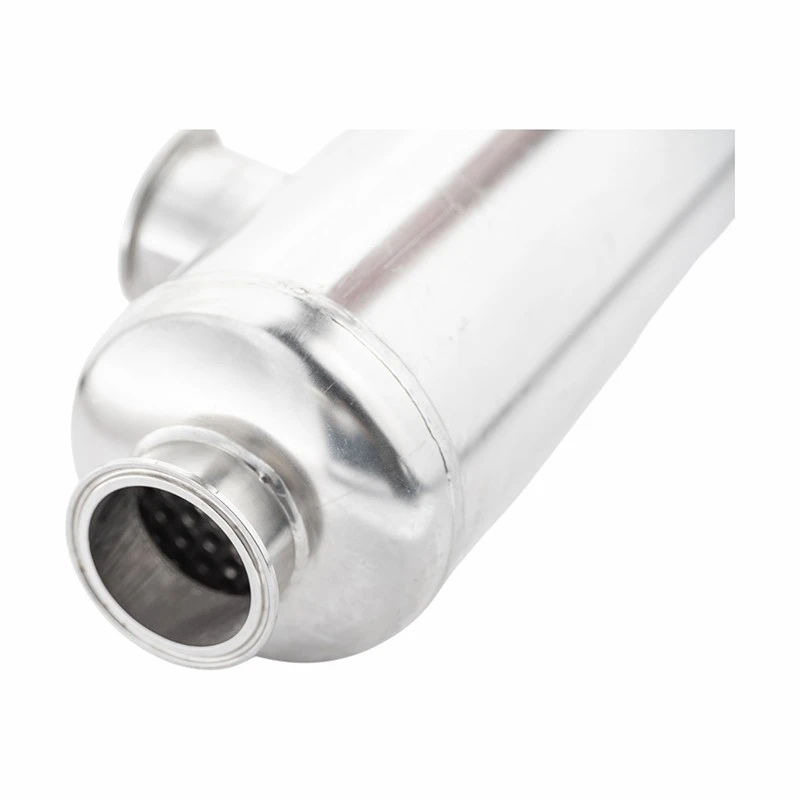

One of the most commonly used insulation materials for condensing heat exchangers is fiberglass. Fiberglass insulation is made from fine glass fibers that are woven together to form a lightweight, flexible material. It is highly effective at reducing heat transfer and is resistant to moisture, making it a popular choice for applications where condensation is a concern. Fiberglass insulation is also relatively inexpensive and easy to install, making it a cost-effective option for many applications.
Another popular insulation material is mineral wool. Mineral wool insulation is made from natural or synthetic minerals that are melted and spun into fibers. It is similar to fiberglass insulation in terms of its thermal performance and moisture resistance, but it is also more fire-resistant and has a higher density, which can make it more effective at reducing noise levels. Mineral wool insulation is often used in industrial applications where fire safety is a concern.
Polyurethane foam is another type of insulation material that is commonly used with condensing heat exchangers. Polyurethane foam is a rigid, closed-cell insulation material that is highly effective at reducing heat transfer and preventing moisture penetration. It is also lightweight and easy to install, making it a popular choice for applications where space is limited. Polyurethane foam insulation is often used in commercial and residential applications, as well as in some industrial applications.
Installation Best Practices
Proper installation of insulation is essential to ensure its effectiveness and longevity. When installing insulation on a condensing heat exchanger, it is important to follow the manufacturer's recommendations and guidelines to ensure that the insulation is installed correctly and securely.
One of the most important considerations when installing insulation is to ensure that it is properly sealed and protected. Any gaps or openings in the insulation can allow heat to escape and moisture to penetrate, reducing its effectiveness and potentially causing damage to the exchanger. To prevent this, it is important to use a high-quality sealant or adhesive to seal the joints and seams of the insulation, and to cover the insulation with a protective jacket or covering to prevent damage from physical impact or environmental factors.
Another important consideration is to ensure that the insulation is installed at the correct thickness. The thickness of the insulation will depend on a variety of factors, including the operating temperature and pressure of the exchanger, the type of fluid being processed, and the environmental conditions in which the exchanger will be installed. It is important to consult with a qualified insulation contractor or engineer to determine the appropriate thickness of insulation for your specific application.
Finally, it is important to regularly inspect and maintain the insulation on your condensing heat exchanger to ensure that it is in good condition and functioning properly. Over time, insulation can become damaged or degraded due to physical impact, environmental factors, or normal wear and tear. Regular inspections can help to identify any issues or problems with the insulation early on, allowing them to be addressed before they cause significant damage to the exchanger.
Conclusion
In conclusion, proper insulation is essential for the efficient and effective operation of a condensing heat exchanger. By reducing heat loss, preventing condensation, and reducing noise levels, insulation can help to improve the energy efficiency, reliability, and safety of the exchanger. When choosing an insulation material for your condensing heat exchanger, it is important to consider the operating temperature and pressure of the exchanger, the type of fluid being processed, and the environmental conditions in which the exchanger will be installed. By following the manufacturer's recommendations and guidelines, and by working with a qualified insulation contractor or engineer, you can ensure that your condensing heat exchanger is properly insulated and operating at its best.
If you are in the market for a high-quality condensing heat exchanger or need assistance with insulation installation or maintenance, please [contact us] to learn more about our products and services. We are committed to providing our customers with the best possible solutions for their heat transfer needs, and we look forward to working with you.
References
- ASHRAE Handbook of Fundamentals. American Society of Heating, Refrigerating and Air-Conditioning Engineers.
- Insulation Materials and Systems. National Insulation Association.
- Heat Exchanger Design Handbook. McGraw-Hill.
Please note that the [contact us] part should be replaced with the actual way your company provides for customers to reach out, such as a contact form link on your official website or other appropriate contact information. Also, the links are inserted as follows:
Insulating a condensing heat exchanger offers several important benefits. For example, in the chemical industry, a Shell and Tube Heat Exchanger for Chemical Industry can greatly benefit from proper insulation. Another type, the Tubular Heat Exchanger, also requires careful consideration of insulation requirements. And for specific applications, the 304 Spiral Wound Shell and Tube Heat Exchanger needs to be insulated according to its unique operating conditions.