

In the realm of thermal engineering, plate heat exchangers have emerged as a cornerstone technology, revolutionizing the way industries transfer heat. As a leading supplier of plate heat exchangers, I've witnessed firsthand the transformative impact these devices have on various sectors, from food and beverage processing to chemical manufacturing. One of the most critical attributes of a plate heat exchanger is its compactness, a feature that not only enhances its efficiency but also makes it a preferred choice for applications where space is at a premium. In this blog post, I'll delve into the concept of compactness in plate heat exchangers, exploring its significance, the factors that contribute to it, and the benefits it offers to end-users.

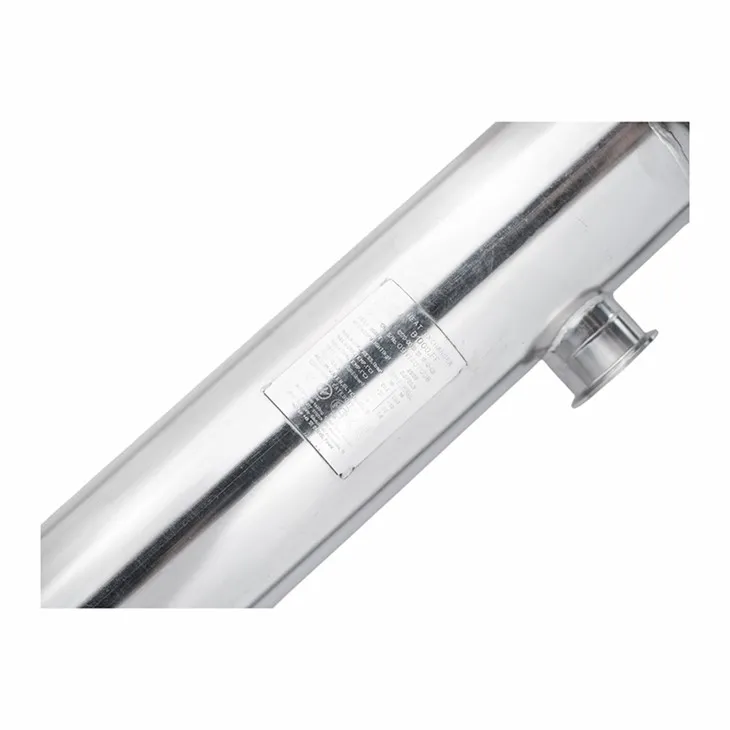
Understanding Compactness in Plate Heat Exchangers
Compactness in a plate heat exchanger refers to its ability to achieve a high heat transfer rate within a relatively small physical footprint. This is typically measured by the heat transfer surface area per unit volume, known as the specific surface area. A higher specific surface area indicates a more compact heat exchanger, as it can transfer more heat with less space. Plate heat exchangers are inherently compact due to their design, which consists of a series of thin, corrugated plates stacked together. These plates create a large surface area for heat transfer, allowing for efficient exchange of thermal energy between two fluids.
Factors Contributing to Compactness
Several factors contribute to the compactness of a plate heat exchanger. Firstly, the design of the plates plays a crucial role. The corrugations on the plates not only increase the surface area but also promote turbulence in the fluid flow, enhancing heat transfer efficiency. The shape and pattern of the corrugations can be optimized to achieve the desired balance between heat transfer and pressure drop. Additionally, the spacing between the plates can be carefully controlled to minimize the volume of the heat exchanger while maintaining adequate flow channels for the fluids.
Another factor is the material selection. Plate heat exchangers can be constructed from a variety of materials, including stainless steel, titanium, and Carbon Steel Heat Exchanger. The choice of material depends on the specific application requirements, such as the temperature, pressure, and chemical compatibility of the fluids. Some materials, like titanium, offer excellent corrosion resistance and high thermal conductivity, allowing for thinner plates and a more compact design.
The manufacturing process also influences the compactness of a plate heat exchanger. Advanced manufacturing techniques, such as precision stamping and laser welding, enable the production of plates with tight tolerances and complex geometries. This results in a more efficient use of space and a higher specific surface area.
Benefits of Compactness
The compactness of a plate heat exchanger offers several significant benefits to end-users. One of the most obvious advantages is space savings. In industries where floor space is limited, such as in urban areas or in retrofit applications, a compact heat exchanger can be a game-changer. It allows for more efficient use of available space, reducing the overall footprint of the equipment and potentially lowering construction costs.
Compact heat exchangers also offer energy savings. Due to their high heat transfer efficiency, they can achieve the same level of heat transfer with less energy input compared to larger, less efficient heat exchangers. This not only reduces operating costs but also contributes to a more sustainable and environmentally friendly operation.
In addition, the compact design of plate heat exchangers makes them easier to install, maintain, and service. They are typically lighter and more portable than other types of heat exchangers, allowing for easier handling and transportation. The modular nature of the plate stack also makes it possible to easily add or remove plates to adjust the heat transfer capacity as needed.
Applications of Compact Plate Heat Exchangers
The compactness of plate heat exchangers makes them suitable for a wide range of applications across various industries. In the food and beverage industry, for example, plate heat exchangers are used for pasteurization, sterilization, and cooling processes. Their compact design allows for easy integration into existing production lines, while their high heat transfer efficiency ensures rapid and uniform heating or cooling of the products.
In the chemical industry, Shell and Tube Heat Exchanger for Chemical Industry are often used for heat recovery, reaction heating, and distillation processes. The ability to handle high temperatures and pressures, combined with their compact size, makes them an ideal choice for these demanding applications.
The HVAC (heating, ventilation, and air conditioning) industry also benefits from the compactness of plate heat exchangers. They are used for heat recovery in ventilation systems, as well as for heating and cooling of air and water. Their small size and high efficiency make them suitable for both residential and commercial applications.
Our Plate Heat Exchanger Solutions
As a supplier of plate heat exchangers, we offer a wide range of products designed to meet the diverse needs of our customers. Our Titanium Tubular Shell and Tube Heat Exchanger are known for their high quality, reliability, and compact design. We use the latest manufacturing technologies and materials to ensure that our heat exchangers offer the best performance and value for money.
Whether you need a standard plate heat exchanger or a custom-designed solution, our team of experts can work with you to understand your requirements and provide the most suitable product. We offer a comprehensive range of services, including installation, commissioning, and maintenance, to ensure that your heat exchanger operates at peak efficiency throughout its lifespan.
Conclusion
In conclusion, the compactness of a plate heat exchanger is a key feature that offers numerous benefits to end-users. It allows for efficient heat transfer in a small space, resulting in space savings, energy savings, and ease of installation and maintenance. At our company, we are committed to providing high-quality plate heat exchangers that leverage the latest technologies and materials to deliver the best performance and value. If you're interested in learning more about our products or discussing your specific heat transfer needs, please don't hesitate to contact us. We look forward to the opportunity to work with you and help you find the perfect heat exchanger solution for your application.
References
- Incropera, F. P., & DeWitt, D. P. (2002). Fundamentals of Heat and Mass Transfer. John Wiley & Sons.
- Kakac, S., & Liu, H. (2002). Heat Exchangers: Selection, Rating, and Thermal Design. CRC Press.
- Shah, R. K., & Sekulic, D. P. (2003). Fundamentals of Heat Exchanger Design. John Wiley & Sons.