

Hey there! As a supplier of Carbon Steel Heat Exchangers, I often get asked if carbon steel heat exchangers can be used in the petrochemical industry. Well, let's dive right into it and find out.
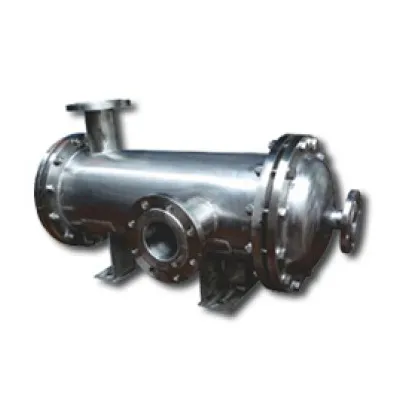
First off, let's talk a bit about what carbon steel heat exchangers are. Carbon steel is an alloy that mainly consists of iron and carbon, with small amounts of other elements. Heat exchangers, on the other hand, are devices used to transfer heat between two or more fluids. Carbon steel heat exchangers are known for their durability, relatively low cost, and good thermal conductivity.
Now, when it comes to the petrochemical industry, it's a tough environment. Petrochemical processes involve handling all sorts of chemicals, high temperatures, and high pressures. So, can carbon steel heat exchangers hold up in this kind of setting?
Advantages of Using Carbon Steel Heat Exchangers in the Petrochemical Industry
One of the biggest advantages of carbon steel heat exchangers is their cost - effectiveness. In the petrochemical industry, where large - scale equipment is needed, cost plays a crucial role. Carbon steel is much cheaper compared to some other materials like titanium. For a company looking to set up a new petrochemical plant or upgrade existing equipment, using carbon steel heat exchangers can significantly reduce the initial investment.
Carbon steel also has good mechanical properties. It can withstand high pressures, which are common in many petrochemical processes. Whether it's the compression of gases or the flow of high - pressure liquids, carbon steel heat exchangers can handle the stress without easily deforming.
Another plus is its relatively easy fabrication. Carbon steel can be easily cut, welded, and formed into various shapes and sizes. This means that custom - made heat exchangers can be produced to fit the specific requirements of different petrochemical processes. For example, if a particular process needs a heat exchanger with a unique tube layout or shell configuration, carbon steel can be shaped accordingly.
Challenges and Limitations
However, using carbon steel heat exchangers in the petrochemical industry isn't all sunshine and rainbows. One of the major issues is corrosion. The petrochemical environment is full of corrosive substances such as sulfur compounds, acids, and salts. Carbon steel is prone to corrosion when exposed to these elements over time. Corrosion can lead to leaks, reduced heat transfer efficiency, and ultimately, the failure of the heat exchanger.
High - temperature corrosion is also a concern. In many petrochemical processes, the operating temperatures can be quite high. At elevated temperatures, carbon steel can react with oxygen and other gases in the environment, leading to oxidation and scaling. This not only affects the performance of the heat exchanger but also shortens its lifespan.
Mitigating the Challenges
To overcome the corrosion problem, several solutions can be implemented. One common method is to use protective coatings. These coatings act as a barrier between the carbon steel surface and the corrosive substances. There are various types of coatings available, such as epoxy coatings and ceramic coatings, each with its own advantages and limitations.
Another approach is to add corrosion inhibitors to the process fluids. These inhibitors can react with the metal surface and form a protective layer, preventing corrosion. However, the effectiveness of corrosion inhibitors depends on factors such as the type of inhibitor, the concentration, and the operating conditions.
Proper maintenance and monitoring are also essential. Regular inspections of the heat exchanger can help detect early signs of corrosion or other problems. Non - destructive testing methods, such as ultrasonic testing and radiographic testing, can be used to check for internal defects without damaging the heat exchanger.
Comparison with Other Materials
Let's compare carbon steel heat exchangers with some other materials commonly used in the petrochemical industry. For example, titanium is a popular choice for heat exchangers in corrosive environments. Titanium Shell and Tube Heat Exchanger offers excellent corrosion resistance, even in highly aggressive petrochemical environments. But titanium is extremely expensive, which may not be feasible for all projects.
Stainless steel is another option. It has better corrosion resistance than carbon steel, but it's also more expensive. The choice between carbon steel, stainless steel, and titanium depends on factors such as the specific petrochemical process, the budget, and the expected lifespan of the heat exchanger.
Applications in the Petrochemical Industry
Despite the challenges, carbon steel heat exchangers are still widely used in the petrochemical industry. They are commonly used in processes where the corrosive environment is relatively mild. For example, in some pre - treatment processes where the fluids are not highly corrosive, carbon steel heat exchangers can work just fine.
They are also used in heat recovery systems. In petrochemical plants, a lot of heat is generated during various processes. Carbon steel heat exchangers can be used to recover this waste heat and transfer it to other parts of the plant, improving energy efficiency.

Conclusion and Call to Action
So, can a carbon steel heat exchanger be used in the petrochemical industry? The answer is yes, but with some considerations. While carbon steel heat exchangers offer cost - effectiveness and good mechanical properties, they also face challenges such as corrosion. By implementing appropriate mitigation measures, carbon steel heat exchangers can be a viable option for many petrochemical applications.
If you're in the petrochemical industry and are considering a heat exchanger for your project, I'd love to have a chat with you. Our company specializes in Carbon Steel Heat Exchanger and can provide you with high - quality products and solutions tailored to your specific needs. Whether you need advice on material selection, corrosion prevention, or custom - made heat exchangers, we're here to help. Don't hesitate to reach out and start a discussion about your requirements.
References
- "Heat Exchangers: Selection, Rating, and Thermal Design" by Sadik Kakac and Hongtan Liu
- "Corrosion in the Petrochemical Industry" by Robert Baboian
- "Petrochemical Engineering Handbook" by B. G. Kyle