

Plastic heat exchangers have become increasingly popular in various industries due to their unique properties and advantages. As a leading supplier of plastic heat exchangers, I have witnessed firsthand how these innovative devices can significantly impact the quality of the fluid being heated or cooled. In this blog post, I will explore the various ways in which plastic heat exchangers affect fluid quality, highlighting their benefits and potential challenges.
1. Chemical Compatibility and Corrosion Resistance
One of the primary advantages of plastic heat exchangers is their excellent chemical compatibility. Unlike metal heat exchangers, which can corrode when exposed to certain chemicals, plastic heat exchangers are highly resistant to a wide range of corrosive substances. This property makes them ideal for use in industries such as chemical processing, pharmaceuticals, and food and beverage, where the fluid being heated or cooled may contain aggressive chemicals.
For example, in a chemical processing plant, a Shell and Tube Plastic Heat Exchanger can be used to transfer heat between a corrosive acid solution and a cooling water stream. The plastic construction of the heat exchanger ensures that it will not react with the acid, preventing contamination of the fluid and maintaining its quality. This not only extends the lifespan of the heat exchanger but also reduces the risk of product contamination and ensures the safety of the process.
2. Low Fouling and Scaling
Another significant benefit of plastic heat exchangers is their low fouling and scaling characteristics. Fouling occurs when deposits accumulate on the heat transfer surfaces, reducing the efficiency of the heat exchanger and increasing energy consumption. Scaling, on the other hand, is the formation of hard mineral deposits on the surfaces, which can also impede heat transfer and cause damage to the heat exchanger.
Plastic materials have a smooth surface finish, which makes it difficult for fouling and scaling to adhere. Additionally, plastics are less likely to react with the fluid being heated or cooled, reducing the formation of deposits. This results in a more efficient heat transfer process and a longer lifespan for the heat exchanger. For instance, a Tube-plate Plastic Heat Exchanger used in a water treatment plant can operate for extended periods without significant fouling, ensuring consistent water quality and reducing maintenance costs.
3. Temperature Control and Fluid Purity
Plastic heat exchangers offer precise temperature control, which is crucial for maintaining the quality of the fluid being heated or cooled. The ability to accurately regulate the temperature helps to prevent overheating or undercooling, which can have a negative impact on the chemical and physical properties of the fluid.
In applications where fluid purity is of utmost importance, such as in the semiconductor industry, plastic heat exchangers are preferred over metal heat exchangers. Metals can leach into the fluid, introducing contaminants and affecting its purity. Plastic heat exchangers, on the other hand, do not release any harmful substances into the fluid, ensuring that the fluid remains pure and suitable for use in sensitive processes. A Silicon Carbide Shell and Tube Heat Exchanger can be used in semiconductor manufacturing to cool high-purity water, maintaining its quality and preventing any contamination that could damage the semiconductor chips.
4. Potential Challenges and Mitigation Strategies
While plastic heat exchangers offer many advantages, they also face some potential challenges. One of the main limitations of plastic heat exchangers is their relatively low thermal conductivity compared to metals. This means that they may require a larger surface area to achieve the same heat transfer rate as a metal heat exchanger. However, advancements in plastic materials and heat exchanger design have helped to overcome this limitation to a certain extent.
Another challenge is the potential for plastic degradation over time, especially when exposed to high temperatures or certain chemicals. To mitigate this risk, it is important to select the appropriate plastic material for the specific application and to ensure that the heat exchanger is operated within its recommended temperature and chemical limits. Regular inspection and maintenance can also help to detect any signs of degradation early and prevent further damage.
5. Conclusion and Call to Action
In conclusion, plastic heat exchangers have a significant impact on the quality of the fluid being heated or cooled. Their chemical compatibility, low fouling and scaling characteristics, precise temperature control, and ability to maintain fluid purity make them an excellent choice for a wide range of applications. As a supplier of plastic heat exchangers, we are committed to providing high-quality products that meet the specific needs of our customers.
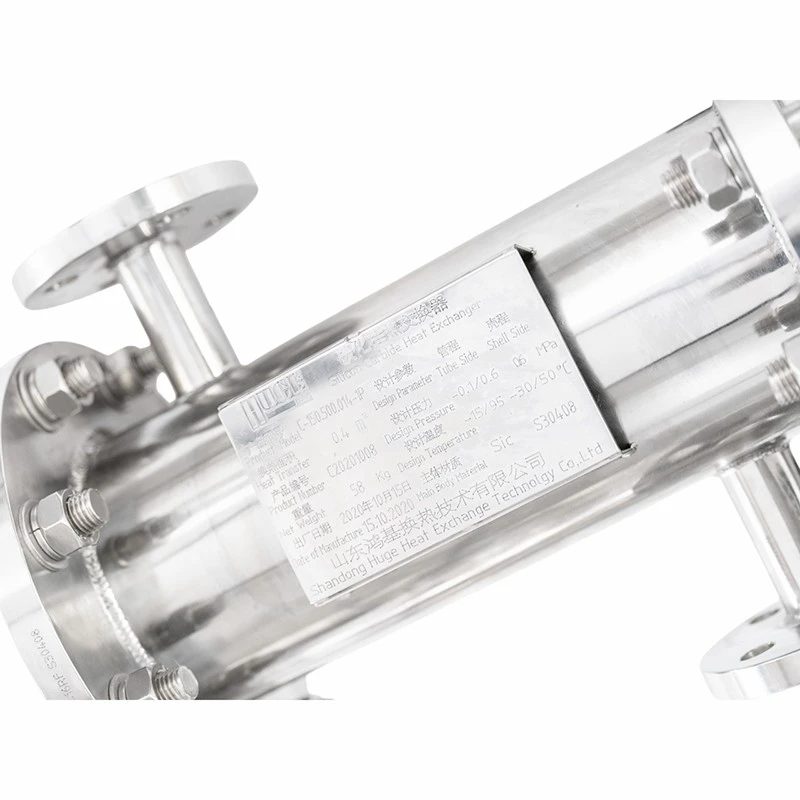

If you are interested in learning more about how our plastic heat exchangers can improve the quality of your fluid heating or cooling processes, please do not hesitate to contact us. Our team of experts is ready to assist you in selecting the right heat exchanger for your application and to provide you with the best possible solutions. Let's work together to enhance the efficiency and reliability of your operations.
References
- Incropera, F. P., DeWitt, D. P., Bergman, T. L., & Lavine, A. S. (2007). Fundamentals of Heat and Mass Transfer. John Wiley & Sons.
- Green, D. W., & Perry, R. H. (2007). Perry's Chemical Engineers' Handbook. McGraw-Hill.
- ASHRAE Handbook: Fundamentals. (2017). American Society of Heating, Refrigerating and Air-Conditioning Engineers.