

Fouling in heat exchangers is a persistent challenge that can significantly impact their efficiency and performance. As a leading supplier of Titanium Heat Exchangers, we understand the critical role that fluid velocity plays in mitigating fouling and ensuring optimal operation. In this blog post, we will explore how the fluid velocity in a titanium heat exchanger affects fouling and discuss strategies to minimize its impact.
Understanding Fouling in Heat Exchangers
Fouling refers to the accumulation of unwanted deposits on the heat transfer surfaces of a heat exchanger. These deposits can include minerals, organic matter, corrosion products, and biological organisms. Fouling can occur in various forms, such as scaling, biofouling, and particulate fouling, and can have a detrimental effect on heat transfer efficiency, pressure drop, and overall system performance.
The formation of fouling layers is a complex process influenced by several factors, including fluid properties, operating conditions, and the characteristics of the heat transfer surface. One of the key factors that can significantly affect fouling is the fluid velocity.
The Role of Fluid Velocity in Fouling
Fluid velocity plays a crucial role in determining the rate of fouling in a heat exchanger. Generally, higher fluid velocities can help to reduce fouling by preventing the deposition of particles and promoting the removal of existing deposits. Here's how fluid velocity affects fouling:
1. Prevention of Particle Deposition
At low fluid velocities, particles suspended in the fluid have a higher chance of settling on the heat transfer surfaces. This is because the drag force exerted by the fluid on the particles is relatively low, allowing them to overcome the fluid flow and adhere to the surface. As the fluid velocity increases, the drag force on the particles also increases, making it more difficult for them to settle on the surface. Therefore, higher fluid velocities can help to prevent the initial deposition of particles and reduce the formation of fouling layers.
2. Removal of Existing Deposits
In addition to preventing particle deposition, higher fluid velocities can also help to remove existing fouling deposits from the heat transfer surfaces. The shear stress exerted by the flowing fluid on the fouling layer can cause it to detach from the surface and be carried away by the fluid. This process is known as mechanical cleaning or self-cleaning. The higher the fluid velocity, the greater the shear stress, and the more effective the cleaning action. Therefore, maintaining a sufficiently high fluid velocity can help to keep the heat transfer surfaces clean and reduce the thickness of the fouling layer.
3. Reduction of Concentration Polarization
Concentration polarization is a phenomenon that occurs when the concentration of solutes near the heat transfer surface is higher than in the bulk fluid. This can lead to the precipitation of salts and the formation of scaling on the surface. Higher fluid velocities can help to reduce concentration polarization by promoting the mixing of the fluid and reducing the concentration gradient near the surface. This can prevent the precipitation of salts and reduce the formation of scaling.

Optimal Fluid Velocity for Minimizing Fouling
While higher fluid velocities can help to reduce fouling, it's important to note that there is an optimal range of fluid velocities for each application. Operating at extremely high fluid velocities can also have some drawbacks, such as increased pressure drop, higher energy consumption, and potential erosion of the heat transfer surfaces. Therefore, it's crucial to find the right balance between preventing fouling and minimizing these negative effects.
The optimal fluid velocity for minimizing fouling depends on several factors, including the type of fluid, the characteristics of the particles in the fluid, the geometry of the heat exchanger, and the operating conditions. In general, a fluid velocity of 1 to 3 m/s is often recommended for most applications to prevent fouling and ensure efficient heat transfer. However, for some applications with high fouling potential, such as those involving seawater or industrial wastewater, higher fluid velocities may be required.
Strategies for Controlling Fluid Velocity
To ensure that the fluid velocity in a titanium heat exchanger is within the optimal range for minimizing fouling, several strategies can be employed:
1. Proper Design of the Heat Exchanger
The design of the heat exchanger plays a crucial role in determining the fluid velocity. By carefully selecting the tube diameter, tube length, and number of tubes, the fluid velocity can be optimized to prevent fouling. For example, using smaller diameter tubes can increase the fluid velocity for a given flow rate, while increasing the number of tubes can reduce the pressure drop.
2. Flow Control Devices
Flow control devices, such as valves and pumps, can be used to regulate the fluid velocity in the heat exchanger. By adjusting the flow rate, the fluid velocity can be maintained at the desired level. For example, a variable frequency drive (VFD) can be used to control the speed of the pump and adjust the flow rate according to the operating conditions.
3. Regular Monitoring and Maintenance
Regular monitoring of the fluid velocity and other operating parameters is essential to ensure that the heat exchanger is operating within the optimal range. If the fluid velocity is found to be too low, adjustments can be made to the flow rate or the heat exchanger design to increase the velocity. Additionally, regular maintenance, such as cleaning and inspection, can help to remove any fouling deposits and ensure the efficient operation of the heat exchanger.
Our Titanium Heat Exchangers and Fouling Prevention
As a leading supplier of Titanium Heat Exchangers, we are committed to providing high-quality products that are designed to minimize fouling and ensure optimal performance. Our heat exchangers are carefully engineered to achieve the right balance between fluid velocity, heat transfer efficiency, and pressure drop.
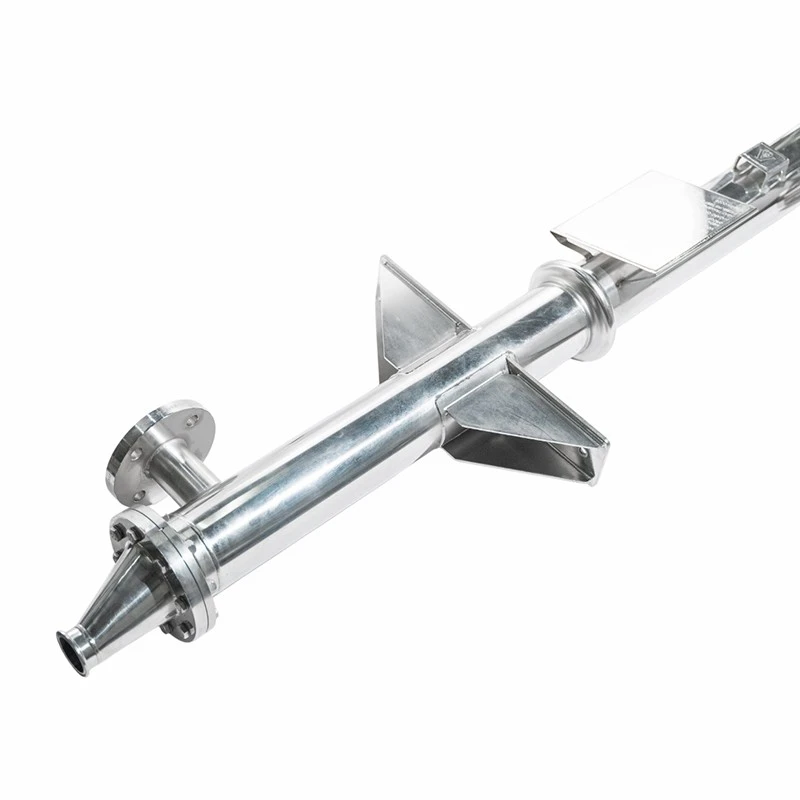
We offer a wide range of titanium heat exchangers, including Double Tubesheet Heat Exchanger for Pharmaceutical Industry, Sanitaty Heat Exchanger, and 316 Plate Heat Exchanger. These heat exchangers are designed to meet the specific requirements of various industries, including pharmaceuticals, food and beverage, chemical processing, and power generation.
Our experienced engineering team can work with you to select the right heat exchanger for your application and optimize the fluid velocity to minimize fouling. We also offer comprehensive after-sales support, including installation, commissioning, and maintenance services, to ensure that your heat exchanger operates efficiently and reliably.
Conclusion
In conclusion, fluid velocity plays a crucial role in determining the rate of fouling in a titanium heat exchanger. Higher fluid velocities can help to prevent the deposition of particles, remove existing fouling deposits, and reduce concentration polarization. By maintaining an optimal fluid velocity, the formation of fouling layers can be minimized, and the efficiency and performance of the heat exchanger can be improved.
As a leading supplier of Titanium Heat Exchangers, we understand the importance of fluid velocity in fouling prevention. Our high-quality heat exchangers are designed to achieve the right balance between fluid velocity, heat transfer efficiency, and pressure drop. If you are looking for a reliable and efficient heat exchanger solution, please contact us to discuss your requirements. We are here to help you select the right heat exchanger and optimize its performance to meet your specific needs.
References
- TEMA Standards, Tubular Exchanger Manufacturers Association, Inc.
- Heat Exchanger Design Handbook, by D. Q. Kern
- Fouling in Heat Exchangers: Fundamentals and Recent Developments, by G. P. Tewari and A. K. Singh