

As a supplier of Titanium Heat Exchangers, I've witnessed firsthand the critical role that heat exchangers play in various industries. One aspect that often goes under the radar but significantly impacts performance is the surface roughness of the heat exchanger. In this blog, I'll delve into how the surface roughness of a titanium heat exchanger affects heat transfer and why it matters for your operations.
Understanding Heat Transfer in Titanium Heat Exchangers
Before we dive into the impact of surface roughness, let's briefly review how heat transfer occurs in a titanium heat exchanger. Heat exchangers are devices designed to transfer heat from one fluid to another without the two fluids coming into direct contact. In a titanium heat exchanger, titanium is used as the primary material due to its excellent corrosion resistance, high strength-to-weight ratio, and good thermal conductivity.
There are three main modes of heat transfer: conduction, convection, and radiation. In a heat exchanger, conduction occurs within the solid titanium walls as heat is transferred from the hot fluid to the cold fluid. Convection takes place when the fluids flow over the surfaces of the heat exchanger, carrying heat away from or towards the walls. Radiation, although present, is usually negligible in most heat exchanger applications.
The Role of Surface Roughness
Surface roughness refers to the irregularities on the surface of the heat exchanger. These irregularities can be caused by various factors during the manufacturing process, such as machining, polishing, or chemical etching. The roughness of the surface can have a profound impact on both conduction and convection heat transfer.
Impact on Conduction
In terms of conduction, a rough surface can increase the effective contact area between the solid titanium wall and the fluids. This increased contact area allows for more efficient heat transfer at the interface. When the surface is rough, the microscopic peaks and valleys create additional pathways for heat to flow, reducing the thermal resistance between the wall and the fluids. As a result, heat can be transferred more quickly from the hot fluid to the cold fluid through the titanium wall.
However, it's important to note that there is a limit to the beneficial effect of surface roughness on conduction. If the roughness is too extreme, it can actually impede heat transfer. For example, if the peaks are too high or the valleys are too deep, they can create pockets of stagnant fluid near the surface, which act as insulation and reduce the overall heat transfer rate.
Impact on Convection
Surface roughness has an even more significant impact on convection heat transfer. When a fluid flows over a rough surface, the irregularities create turbulence in the boundary layer. Turbulence enhances the mixing of the fluid near the surface, which increases the convective heat transfer coefficient. The convective heat transfer coefficient is a measure of how efficiently heat is transferred between the fluid and the surface. A higher coefficient means that more heat can be transferred per unit area and per unit temperature difference.
The increased turbulence also helps to prevent the formation of a thick boundary layer, which is a layer of fluid that adheres to the surface and acts as a barrier to heat transfer. By disrupting the boundary layer, the rough surface allows the hot fluid to come into closer contact with the cold surface, facilitating more efficient heat transfer.
Measuring Surface Roughness
Surface roughness is typically measured using parameters such as Ra (arithmetical mean deviation of the roughness profile) or Rz (maximum height of the roughness profile). These parameters provide a quantitative measure of the average height of the surface irregularities. The appropriate surface roughness for a heat exchanger depends on various factors, including the type of fluids being used, the flow rates, and the operating conditions.
In general, a moderate level of surface roughness is preferred for optimal heat transfer. For example, in some applications, a surface with an Ra value between 0.5 and 2 micrometers may provide the best balance between increased contact area and enhanced turbulence. However, it's important to work with a reputable heat exchanger manufacturer who can recommend the most suitable surface roughness based on your specific requirements.
Applications and Considerations
The impact of surface roughness on heat transfer is relevant in a wide range of industries and applications. For example, in the chemical industry, heat exchangers are used to cool or heat various chemical processes. A heat exchanger with the right surface roughness can improve the efficiency of these processes, reducing energy consumption and operating costs.
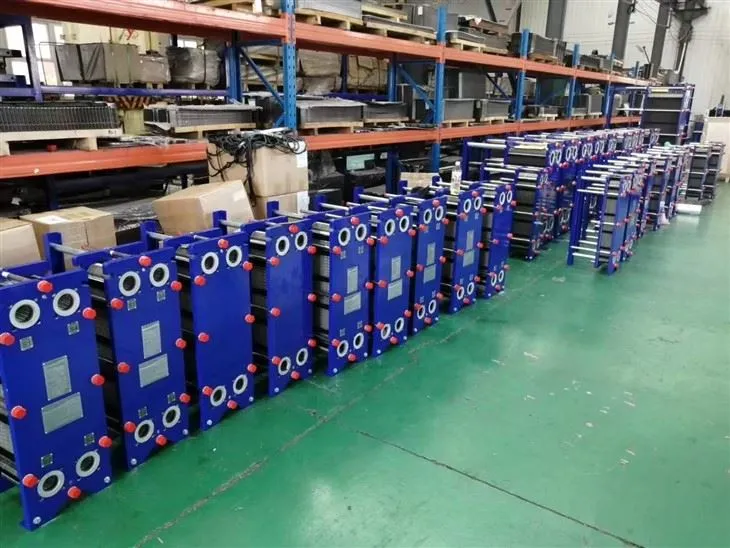

In the power generation industry, heat exchangers are used to transfer heat from the steam to the cooling water in a condenser. By optimizing the surface roughness, the heat transfer rate can be increased, leading to improved power plant efficiency.
When selecting a titanium heat exchanger, it's important to consider the surface roughness in addition to other factors such as the material quality, design, and size. A heat exchanger with the appropriate surface roughness can provide better performance and longer service life.
Our Product Offerings
As a Titanium Heat Exchanger supplier, we offer a wide range of high-quality heat exchangers designed to meet the diverse needs of our customers. Our products include 316 Spiral Wound Shell and Tube Heat Exchanger, 304 Plate Heat Exchanger, and Double Tubesheet Heat Exchanger for Medical Industry.
We understand the importance of surface roughness in heat transfer and ensure that our heat exchangers are manufactured with the appropriate surface finish to optimize performance. Our team of experts can work with you to select the right heat exchanger for your application and provide customized solutions based on your specific requirements.
Contact Us for Procurement
If you're interested in learning more about our titanium heat exchangers or have any questions about surface roughness and heat transfer, we'd love to hear from you. Contact us today to start a discussion about your procurement needs. Our experienced sales team will be happy to assist you and provide you with detailed product information and pricing.
References
- Incropera, F. P., & DeWitt, D. P. (2002). Fundamentals of Heat and Mass Transfer. John Wiley & Sons.
- Kakaç, S., & Liu, H. (2002). Heat Exchangers: Selection, Rating, and Thermal Design. CRC Press.
- Shah, R. K., & Sekulic, D. P. (2003). Fundamentals of Heat Exchanger Design. John Wiley & Sons.