

Hey there! As a supplier of Titanium Heat Exchangers, I often get asked about the shock resistance properties of these bad boys. So, I thought I'd dive into it and share some insights with you all.
First off, let's talk about what a heat exchanger does. In simple terms, a heat exchanger is a device that transfers heat from one fluid to another. This can be used in a wide range of applications, from industrial processes to HVAC systems. And when it comes to heat exchangers, titanium is a material that's gaining a lot of popularity.
So, what makes titanium such a great choice for heat exchangers? Well, one of the key factors is its excellent shock resistance properties. But before we get into that, let's take a quick look at what shock resistance actually means.
Shock resistance refers to a material's ability to withstand sudden impacts or vibrations without suffering significant damage. In the context of a heat exchanger, this is crucial because these devices are often exposed to a variety of dynamic forces during operation. For example, in an industrial setting, a heat exchanger might be subject to sudden pressure changes, flow surges, or even physical impacts from nearby equipment.
Now, let's see how titanium stacks up in terms of shock resistance. Titanium is known for its high strength - to - weight ratio. This means that it can be very strong while still being relatively lightweight. When it comes to shock resistance, this is a huge advantage. A titanium heat exchanger can absorb a significant amount of energy from a shock without deforming or cracking.

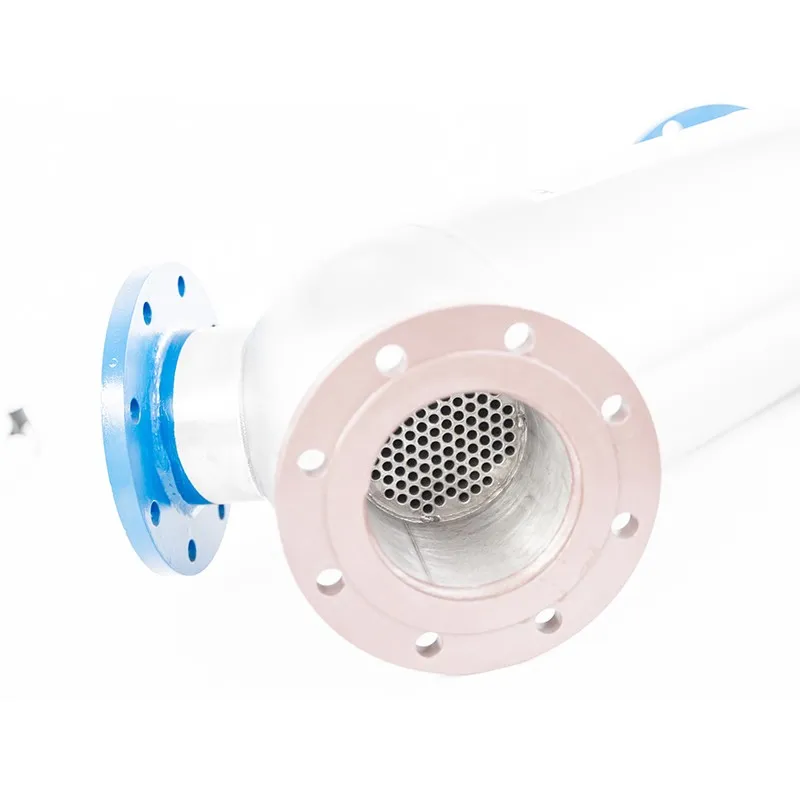
One of the reasons for titanium's good shock resistance is its unique crystal structure. Titanium has a hexagonal close - packed (HCP) crystal structure, which gives it excellent ductility. Ductility is the ability of a material to deform under stress without breaking. So, when a shock occurs, the titanium in the heat exchanger can stretch and bend a bit, absorbing the energy from the impact rather than shattering.
Another important aspect is titanium's corrosion resistance. Corrosion can weaken a material over time, making it more susceptible to shock damage. Since titanium is highly resistant to corrosion, it maintains its structural integrity even in harsh environments. This means that the shock resistance properties of a titanium heat exchanger remain consistent over its lifespan.
Let's compare titanium with some other common materials used in heat exchangers. For instance, carbon steel is also widely used in heat exchanger manufacturing. You can check out our Carbon Steel Spiral Heat Exchanger and Carbon Steel Plate Heat Exchanger. While carbon steel is strong, it is more prone to corrosion, especially in acidic or salty environments. Corrosion can create weak spots in the steel, reducing its shock resistance. In contrast, titanium can handle these harsh conditions much better.
In some applications, like the food and beverage industry or pharmaceutical manufacturing, a Sterile Heat Exchanger is required. Titanium's shock resistance is a great asset here too. In these industries, the heat exchanger needs to be reliable and durable. Any damage due to shock could lead to contamination or a breakdown in the production process. With its high shock resistance, a titanium heat exchanger can ensure a smooth and uninterrupted operation.
Now, let's talk about how the design of a titanium heat exchanger also plays a role in its shock resistance. The shape, size, and internal structure of the heat exchanger can all affect how it responds to shocks. For example, a well - designed heat exchanger will have proper bracing and support structures to distribute the shock energy evenly across the device. This prevents any one area from taking too much stress, reducing the risk of damage.
Manufacturing processes also matter. At our company, we use advanced manufacturing techniques to ensure the highest quality of our titanium heat exchangers. These processes help to optimize the material's properties, including its shock resistance. We carefully control the heat treatment and forming processes to make sure that the titanium has the right balance of strength and ductility.
In real - world applications, the shock resistance of titanium heat exchangers has been proven time and time again. In offshore oil and gas platforms, where the heat exchangers are exposed to rough sea conditions, including waves and vibrations, titanium heat exchangers have shown excellent performance. They can withstand the constant shocks and continue to operate efficiently for long periods.
In power plants, especially those using geothermal or nuclear energy, the heat exchangers need to be extremely reliable. The shock resistance of titanium helps to ensure that these critical components can handle any sudden changes in pressure or flow without failing.
So, if you're in the market for a heat exchanger and shock resistance is a top priority, a titanium heat exchanger is definitely worth considering. Its unique combination of high strength, ductility, and corrosion resistance makes it a top choice for a wide range of applications.
Whether you're involved in industrial manufacturing, HVAC, or any other industry that requires heat transfer, our titanium heat exchangers can provide you with the reliability and performance you need. If you're interested in learning more or discussing your specific requirements, don't hesitate to reach out. We're here to help you find the perfect heat exchanger solution for your needs.
References
- "Materials Science and Engineering: An Introduction" by William D. Callister Jr. and David G. Rethwisch
- Industry reports on heat exchanger materials and applications