

Hey there! As a supplier of 304 plate heat exchangers, I've been getting a lot of questions lately about the difference between single - pass and multi - pass 304 plate heat exchangers. So, I thought I'd write this blog to clear things up.
Let's start with the basics. A 304 plate heat exchanger is a type of heat exchanger that uses a series of thin, corrugated plates to transfer heat between two fluids. These plates are made of 304 stainless steel, which is known for its corrosion resistance and durability. It's a popular choice in many industries, from food and beverage to chemical processing.
Single - Pass 304 Plate Heat Exchangers
A single - pass 304 plate heat exchanger is pretty straightforward. In this setup, the two fluids flow through the heat exchanger only once. One fluid enters at one end of the exchanger and exits at the other end, while the other fluid does the same but in the opposite direction. This is called counter - current flow, and it's a common way to maximize heat transfer efficiency.
The main advantage of a single - pass heat exchanger is its simplicity. There are fewer components and less complexity in the design. This means it's generally easier to install, maintain, and clean. If you have a relatively simple heat transfer application where the temperature difference between the two fluids is not too large, a single - pass heat exchanger can be a great choice.
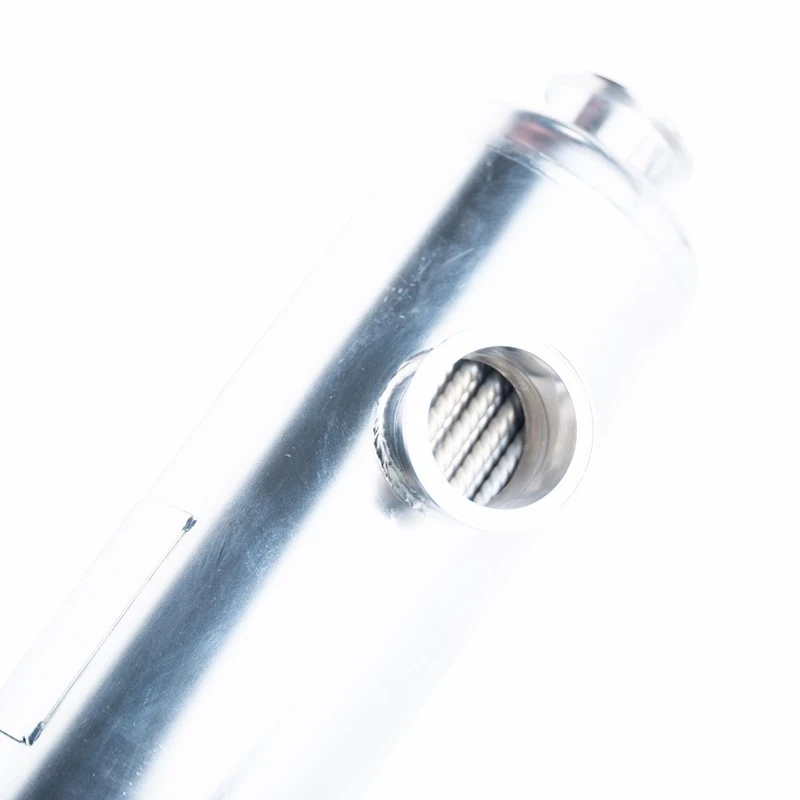

For example, let's say you're using the heat exchanger to pre - heat water in a small - scale food processing plant. The temperature difference between the hot fluid (maybe steam) and the cold fluid (water) is not extremely high, and you just need a basic heat transfer solution. A single - pass 304 plate heat exchanger would work well in this case.
However, single - pass heat exchangers do have their limitations. Since the fluids only flow through once, they may not be able to achieve a very high degree of heat transfer. If you need to transfer a large amount of heat or if the temperature difference between the two fluids is significant, a single - pass heat exchanger might not be sufficient.
Multi - Pass 304 Plate Heat Exchangers
On the other hand, multi - pass 304 plate heat exchangers are a bit more complex. In a multi - pass setup, the fluids flow through the heat exchanger multiple times. This is achieved by using baffles or other flow - directing devices inside the exchanger.
The main benefit of a multi - pass heat exchanger is its ability to achieve a higher degree of heat transfer. By making the fluids flow through the exchanger multiple times, they have more opportunities to exchange heat. This is especially useful when you have a large temperature difference between the two fluids or when you need to transfer a large amount of heat.
For instance, in a chemical processing plant where you're trying to cool down a very hot chemical stream using a cold water stream, a multi - pass 304 plate heat exchanger can be much more effective. The multiple passes allow for a more thorough heat exchange, resulting in better temperature control and more efficient operation.
But, as you might expect, the increased complexity of multi - pass heat exchangers comes with some drawbacks. They are generally more expensive to purchase and install because of the additional components and more intricate design. Maintenance and cleaning can also be more challenging since there are more areas for fouling and blockages.
Comparing the Two
When it comes to choosing between a single - pass and a multi - pass 304 plate heat exchanger, there are several factors to consider.
Cost: As mentioned earlier, single - pass heat exchangers are usually cheaper. If you're on a tight budget and your heat transfer requirements are not too demanding, a single - pass exchanger might be the way to go. On the other hand, if you need a high - performance heat exchanger for a large - scale operation, the higher cost of a multi - pass exchanger might be justified.
Heat Transfer Efficiency: Multi - pass heat exchangers are more efficient in terms of heat transfer, especially for applications with large temperature differences. If heat transfer efficiency is your top priority, a multi - pass exchanger is likely the better choice.
Maintenance: Single - pass heat exchangers are easier to maintain and clean. If you don't have a lot of resources for maintenance or if you need a heat exchanger that can be quickly serviced, a single - pass exchanger is more suitable.
Application Requirements: The specific requirements of your application are crucial. If you're dealing with a simple, low - temperature - difference heat transfer task, a single - pass exchanger will do the job. But for complex processes with high heat transfer demands, a multi - pass exchanger is necessary.
Related Products
If you're still exploring your options, we also offer other types of heat exchangers. Check out our Condenser, which is great for applications where you need to condense a vapor into a liquid. We also have a Double Tubesheet Heat Exchanger for Medical Industry, designed to meet the strict requirements of the medical field. And if you're looking for a different material, our 316 Tubular Shell and Tube Heat Exchanger might be a good fit.
Conclusion
In conclusion, both single - pass and multi - pass 304 plate heat exchangers have their own unique advantages and disadvantages. The choice between the two depends on your specific heat transfer needs, budget, and maintenance capabilities. As a supplier, I'm here to help you make the right decision. If you're interested in learning more about our 304 plate heat exchangers or any of our other products, don't hesitate to reach out. We can discuss your requirements in detail and find the best solution for your application.
References
- Incropera, F. P., & DeWitt, D. P. (2002). Fundamentals of Heat and Mass Transfer. Wiley.
- Shah, R. K., & Sekulic, D. P. (2003). Fundamentals of Heat Exchanger Design. Wiley.