

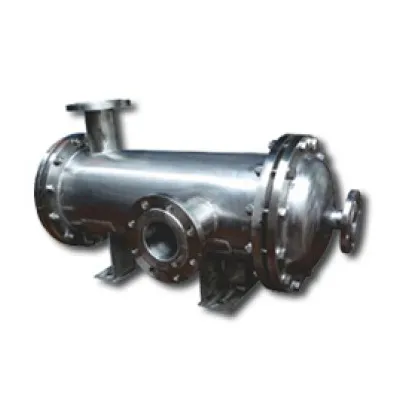
The maximum operating temperature of a tubular heat exchanger is a critical parameter that significantly influences its performance, efficiency, and lifespan. As a leading supplier of tubular heat exchangers, we understand the importance of this factor and are committed to providing our customers with in - depth knowledge and high - quality products.
Factors Affecting the Maximum Operating Temperature
Material Selection
The choice of materials for a tubular heat exchanger plays a pivotal role in determining its maximum operating temperature. Different metals have distinct thermal and mechanical properties that respond differently to high temperatures.
- Stainless Steel: A common material used in tubular heat exchangers, especially the 316 grade. 316 Tubular Shell and Tube Heat Exchanger made of 316 stainless steel can generally withstand temperatures up to around 870°C. This grade of stainless steel has good corrosion resistance and mechanical strength at elevated temperatures, making it suitable for a wide range of industrial applications, such as chemical processing and food and beverage industries.
- Titanium: Titanium is another excellent material for heat exchangers, especially in harsh environments. Titanium Shell and Tube Heat Exchanger can operate at relatively high temperatures. Pure titanium can handle temperatures up to approximately 540°C. Titanium has a high strength - to - weight ratio and is highly resistant to corrosion, which makes it ideal for applications in the marine, chemical, and power generation industries.
- Other Alloys: There are also various special - purpose alloys available that can withstand extremely high temperatures. For example, some nickel - based alloys can operate at temperatures well above 1000°C. These alloys are often used in high - temperature applications such as aerospace and certain high - end industrial processes.
Design and Construction
The design and construction of the tubular heat exchanger also impact its maximum operating temperature.
- Tube Thickness: Thicker tubes can generally withstand higher temperatures as they provide more structural integrity. However, thicker tubes may also reduce the heat transfer efficiency due to increased thermal resistance. A careful balance needs to be struck between tube thickness and heat transfer requirements.
- Shell and Baffle Design: The design of the shell and baffles affects the flow distribution of the fluids inside the heat exchanger. Proper design ensures uniform heat transfer and reduces the risk of hot spots, which can cause local overheating and damage to the heat exchanger at high temperatures.
Fluid Properties
The properties of the fluids flowing through the heat exchanger are important considerations.

- Thermal Conductivity: Fluids with high thermal conductivity can transfer heat more efficiently, which can help in maintaining a more uniform temperature distribution inside the heat exchanger. This, in turn, allows the heat exchanger to operate at higher temperatures without causing excessive thermal stress.
- Viscosity: High - viscosity fluids may require more energy to pump through the heat exchanger. At high temperatures, the viscosity of some fluids may change significantly, which can affect the flow rate and heat transfer performance.
Importance of Knowing the Maximum Operating Temperature
Safety
Operating a tubular heat exchanger beyond its maximum operating temperature can pose serious safety risks. High temperatures can cause material failure, such as tube rupture or shell deformation, which can lead to leaks of hot fluids. These leaks can be hazardous to personnel and the environment, especially if the fluids are flammable, toxic, or corrosive.
Performance and Efficiency
Operating at the appropriate temperature range ensures optimal performance and efficiency of the heat exchanger. When the temperature is too high, the heat transfer efficiency may decrease due to factors such as increased thermal resistance and changes in fluid properties. This can result in higher energy consumption and reduced productivity.
Equipment Lifespan
Exceeding the maximum operating temperature can significantly reduce the lifespan of the heat exchanger. High temperatures can cause accelerated material degradation, such as oxidation, creep, and fatigue. These processes can lead to premature failure of the heat exchanger, resulting in costly repairs and replacements.
Applications and Temperature Requirements
Chemical Industry
In the chemical industry, tubular heat exchangers are used in a variety of processes, such as distillation, reaction heating, and product cooling. Different chemical processes have different temperature requirements. For example, in some petrochemical processes, the heat exchangers may need to operate at temperatures up to 500 - 600°C. In such cases, heat exchangers made of high - temperature - resistant materials like stainless steel or special alloys are required.
Food and Beverage Industry
In the food and beverage industry, Sanitaty Heat Exchanger are commonly used for pasteurization, sterilization, and cooling processes. These heat exchangers typically operate at relatively lower temperatures, usually below 150°C. The use of materials that are compliant with food safety standards, such as 316 stainless steel, is essential in this industry.
Power Generation
In power generation plants, tubular heat exchangers are used for steam generation, condensate cooling, and feedwater heating. In fossil - fuel power plants, the heat exchangers may need to operate at high temperatures, up to 500 - 600°C. Nuclear power plants also use heat exchangers, but the temperature requirements are more strictly regulated due to safety concerns.
How We Can Help
As a tubular heat exchanger supplier, we offer a wide range of heat exchangers with different materials, designs, and temperature capabilities to meet the diverse needs of our customers. Our team of experts can help you select the most suitable heat exchanger based on your specific temperature requirements, fluid properties, and application.
We also provide comprehensive technical support and after - sales service. We can assist in the installation, commissioning, and maintenance of the heat exchangers to ensure their long - term reliable operation. Whether you need a heat exchanger for a small - scale laboratory application or a large - scale industrial process, we have the expertise and resources to provide you with the best solution.
If you are interested in learning more about our tubular heat exchangers or have specific requirements regarding the maximum operating temperature, we encourage you to contact us for a detailed discussion. Our dedicated sales team is ready to assist you in finding the perfect heat exchanger for your application.
References
- Incropera, F. P., DeWitt, D. P., Bergman, T. L., & Lavine, A. S. (2019). Fundamentals of Heat and Mass Transfer. John Wiley & Sons.
- Green, D. W., & Perry, R. H. (2007). Perry's Chemical Engineers' Handbook. McGraw - Hill.