

Hey there! As a supplier of plastic heat exchangers, I often get asked if our products are suitable for food and beverage applications. Well, let's dive right into it and find out.
First off, let's talk about what plastic heat exchangers are. These are devices that transfer heat between two fluids, usually a hot and a cold one, using plastic materials. There are different types, like the Tube-plate Plastic Heat Exchanger and the Immersed Plastic Heat Exchanger. They come with their own set of features and benefits.
One of the big advantages of plastic heat exchangers for food and beverage applications is their corrosion resistance. Unlike metal heat exchangers, plastics don't rust or corrode when they come into contact with acidic or alkaline substances, which are quite common in the food and beverage industry. For example, fruit juices are often acidic, and some cleaning agents used in the industry are alkaline. With plastic heat exchangers, you don't have to worry about the heat exchanger deteriorating over time due to corrosion, which can lead to contamination of the food or beverage product.
Another plus is their cost - effectiveness. Plastic is generally cheaper than many metals used in heat exchangers. This means that if you're running a food or beverage business, you can save on the initial investment cost. Also, since they're less prone to corrosion, the maintenance costs are lower in the long run. You won't have to replace parts as often as you would with a metal heat exchanger.
Now, let's talk about hygiene. In the food and beverage industry, hygiene is of utmost importance. Plastic heat exchangers are relatively easy to clean. They have smooth surfaces that don't allow bacteria and other microorganisms to adhere easily. You can use standard cleaning agents and methods to keep them clean and free from contaminants. This helps in maintaining the quality and safety of the food and beverage products that pass through the heat exchanger.
However, there are also some considerations. One of the main concerns is the temperature limitations of plastics. Most plastics have a lower maximum operating temperature compared to metals. In food and beverage applications, there are processes that require high - temperature treatment, such as pasteurization. You need to make sure that the plastic heat exchanger you choose can withstand the temperatures involved in your specific process. Some advanced plastics can handle relatively high temperatures, but you have to do your research and choose the right one.

Another thing is the pressure resistance. Food and beverage processes may involve high - pressure conditions, especially in some bottling or canning operations. Plastic heat exchangers may not be as strong as metal ones when it comes to withstanding high pressures. So, you need to carefully assess the pressure requirements of your application and select a plastic heat exchanger that can handle it.
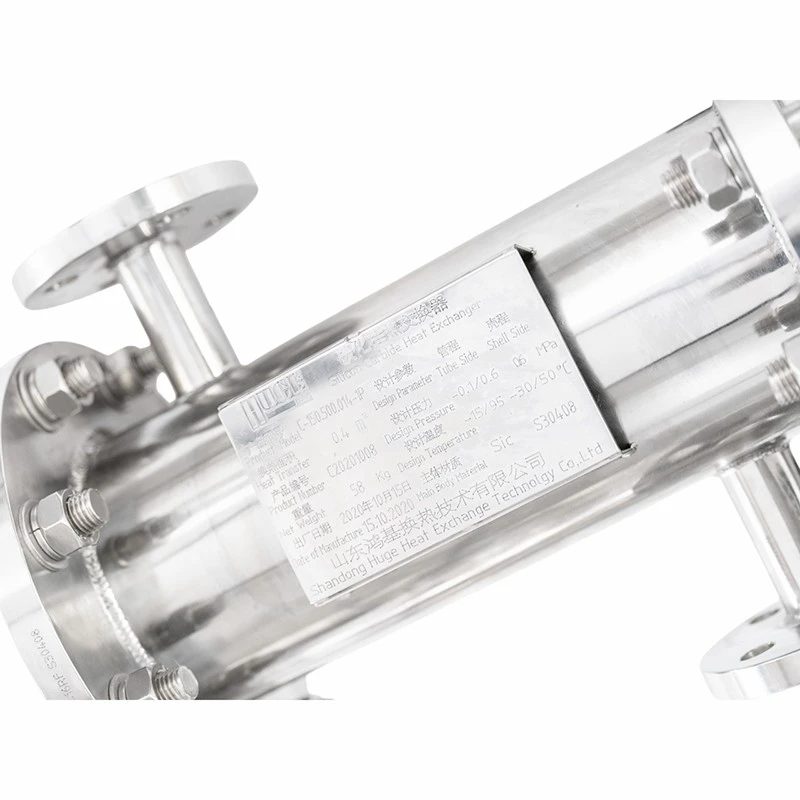
Let's also mention the Silicon Carbide Shell and Tube Heat Exchanger. While it's not strictly a plastic heat exchanger, it's a non - metal option that can be considered for some food and beverage applications. Silicon carbide has excellent heat transfer properties and is highly resistant to corrosion and high temperatures. It might be a good alternative if your application has very demanding temperature or corrosion requirements.
In terms of material compatibility, you have to ensure that the plastic used in the heat exchanger is safe for contact with food and beverages. There are food - grade plastics available in the market, and it's crucial to choose a heat exchanger made from such materials. This ensures that no harmful substances leach into the food or beverage product.
When it comes to installation, plastic heat exchangers are usually lighter than metal ones. This makes them easier to handle and install. You can save on installation time and labor costs. Also, they can be more flexible in terms of installation location since they don't require heavy - duty support structures like some metal heat exchangers.
In summary, plastic heat exchangers can be a great option for many food and beverage applications. They offer corrosion resistance, cost - effectiveness, and good hygiene. But you need to carefully consider factors like temperature and pressure limitations, material compatibility, and choose the right type of heat exchanger for your specific needs.
If you're in the food and beverage industry and are thinking about getting a heat exchanger, I'd love to have a chat with you. We can discuss your specific requirements and help you find the best plastic heat exchanger solution for your business. Whether it's the Tube - plate Plastic Heat Exchanger, Immersed Plastic Heat Exchanger, or something else, we've got you covered. Reach out to us, and let's start a conversation about how we can meet your heat exchange needs in the food and beverage industry.
References:
- Various industry reports on heat exchangers in the food and beverage industry
- Manufacturer's specifications for plastic and non - metal heat exchangers