

In the field of thermal engineering, condensing heat exchangers play a crucial role in various industrial and residential applications. However, their performance can be significantly affected by low - temperature conditions, especially frost formation. As a seasoned supplier of condensing heat exchangers, I have encountered numerous challenges related to frost resistance and have gathered valuable insights on how to enhance it.
Understanding Frost Formation on Condensing Heat Exchangers
Before delving into the solutions, it's essential to grasp the underlying mechanisms of frost formation. Frost typically forms on the surface of a condensing heat exchanger when the temperature of the exchanger surface is below the dew point of the surrounding air and also below the freezing point. This causes the water vapor in the air to directly deposit as ice on the exchanger's fins or tubes.
The formation of frost has several negative impacts on the heat exchanger. Firstly, it acts as an insulating layer, reducing the heat transfer efficiency between the working fluids and the surrounding air. As a result, the exchanger has to work harder to achieve the desired heat transfer rate, leading to increased energy consumption. Secondly, frost accumulation can block the air passages in the heat exchanger, restricting the airflow and further degrading the performance.
Material Selection for Improved Frost Resistance
One of the fundamental ways to enhance the frost resistance of a condensing heat exchanger is through proper material selection. Materials with high thermal conductivity can help to maintain a more uniform temperature distribution across the exchanger's surface, reducing the likelihood of local cold spots where frost is likely to form.
For instance, copper and aluminum are commonly used materials in heat exchangers due to their excellent thermal conductivity. Copper has a relatively high thermal conductivity of about 385 - 401 W/(m·K), which allows for efficient heat transfer. Aluminum, on the other hand, is lighter and more corrosion - resistant, with a thermal conductivity of around 205 - 237 W/(m·K).
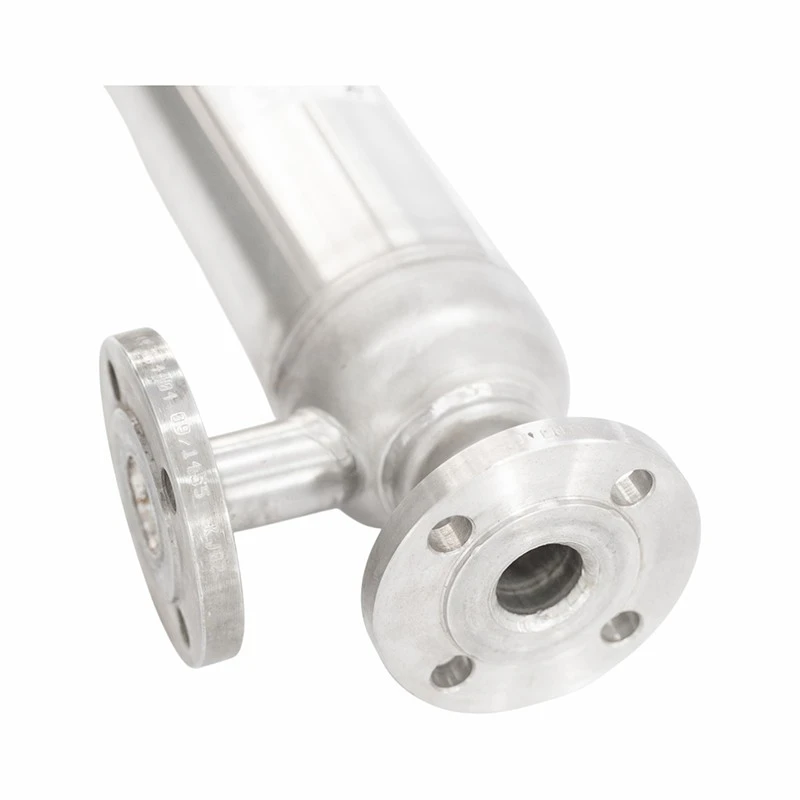

In recent years, the use of advanced alloys has also gained traction. These alloys can be designed to have specific properties, such as enhanced corrosion resistance and improved surface characteristics. For example, the 316 Tubular Shell and Tube Heat Exchanger is made of 316 stainless steel, which offers good corrosion resistance in harsh environments. This type of material can prevent the formation of rust and other contaminants that could potentially promote frost formation.
Surface Treatment Techniques
Surface treatment is another effective approach to improve frost resistance. By modifying the surface properties of the heat exchanger, we can reduce the adhesion of frost and make it easier to remove.
One common surface treatment method is the application of hydrophobic coatings. Hydrophobic surfaces have a high contact angle with water, which means that water droplets tend to bead up and roll off rather than spreading out and freezing. This can significantly reduce the amount of water that comes into contact with the exchanger surface and forms frost.
Micro - and nano - structured surfaces are also being explored for their potential in frost resistance. These surfaces can disrupt the formation of ice crystals by creating a physical barrier or by altering the surface energy. For example, some researchers have developed micro - patterned surfaces that can delay the onset of frost formation by several hours compared to traditional smooth surfaces.
Design Optimization
The design of the condensing heat exchanger can have a profound impact on its frost resistance. The geometry of the fins and tubes, as well as the overall layout of the exchanger, can be optimized to improve airflow and heat transfer.
Fins are an integral part of many condensing heat exchangers, as they increase the surface area available for heat transfer. However, the shape and arrangement of the fins can affect frost formation. For example, fins with a larger pitch may allow for better airflow, reducing the likelihood of frost accumulation. Additionally, fins with a curved or serrated shape can enhance heat transfer and disrupt the formation of a continuous frost layer.
The tube arrangement also plays a role. In Shell and Tube Heat Exchangers, the spacing between the tubes can be adjusted to optimize the airflow and heat transfer. A proper tube arrangement can ensure that the air flows evenly across the exchanger surface, reducing the formation of cold spots where frost is more likely to form.
Defrosting Strategies
Despite taking preventive measures, frost formation on condensing heat exchangers is often inevitable. Therefore, effective defrosting strategies are essential to maintain the performance of the exchanger.
One of the most common defrosting methods is reverse - cycle defrosting. In this method, the refrigerant flow in the heat exchanger is reversed, causing the exchanger to act as a condenser instead of an evaporator. This raises the temperature of the exchanger surface, melting the frost. Reverse - cycle defrosting is relatively simple and effective, but it can cause a temporary interruption in the normal operation of the system and may also lead to energy losses.
Hot - gas defrosting is another option. In this method, hot refrigerant gas is diverted to the heat exchanger to melt the frost. This method can be more energy - efficient than reverse - cycle defrosting, as it does not require the entire system to be reversed. However, it requires additional piping and control systems, which can increase the complexity and cost of the system.
Monitoring and Control Systems
To ensure the long - term performance and frost resistance of condensing heat exchangers, it's important to implement monitoring and control systems. These systems can continuously monitor parameters such as temperature, humidity, and pressure, and adjust the operation of the heat exchanger accordingly.
For example, a temperature sensor can be installed on the surface of the heat exchanger to detect the onset of frost formation. Once the temperature drops below a certain threshold, the control system can activate the defrosting cycle. Humidity sensors can also be used to measure the moisture content in the air, as high humidity levels increase the likelihood of frost formation. By adjusting the airflow or the refrigerant flow based on the humidity readings, the system can prevent excessive frost accumulation.
Conclusion
Improving the frost resistance of a condensing heat exchanger is a multi - faceted challenge that requires a combination of material selection, surface treatment, design optimization, defrosting strategies, and monitoring systems. As a supplier of condensing heat exchangers, we are committed to developing and providing high - performance products that can withstand harsh environmental conditions.
If you are in the market for a reliable condensing heat exchanger with enhanced frost resistance, we invite you to contact us for procurement and洽谈. Our team of experts is ready to assist you in selecting the most suitable heat exchanger for your specific needs.
References
- Incropera, F. P., & DeWitt, D. P. (2002). Introduction to heat transfer. John Wiley & Sons.
- Kays, W. M., & London, A. L. (1998). Compact heat exchangers. McGraw - Hill.
- Webb, R. L. (1994). Principles of enhanced heat transfer. John Wiley & Sons.