

Hey there! As a supplier of heat exchangers for the chemical industry, I've seen firsthand how crucial these devices are in countless chemical processes. Heat exchangers play a vital role in transferring heat between two or more fluids, and understanding the heat transfer mechanisms is key to getting the most out of them. So, let's dive into the different heat transfer mechanisms in a chemical heat exchanger.
Conduction
First up, we've got conduction. Conduction is the transfer of heat through a solid material or between two solids in direct contact. In a heat exchanger, conduction happens mainly through the walls of the tubes or plates that separate the hot and cold fluids.
Think of it like this: when you hold one end of a metal rod over a flame, the heat travels through the rod to your hand. That's conduction in action. In a heat exchanger, the hot fluid heats up the tube or plate wall, and the heat then conducts through the wall to the cold fluid on the other side.
The rate of conduction depends on a few factors. One of the most important is the thermal conductivity of the material. Materials like metals, especially copper and aluminum, have high thermal conductivities, which means they're great at conducting heat. That's why many heat exchangers use metal tubes or plates. The thickness of the wall also matters. A thinner wall allows heat to conduct more quickly because there's less material for the heat to travel through.
Convection
Next, we have convection. Convection is the transfer of heat by the movement of a fluid, either liquid or gas. There are two types of convection: natural and forced.
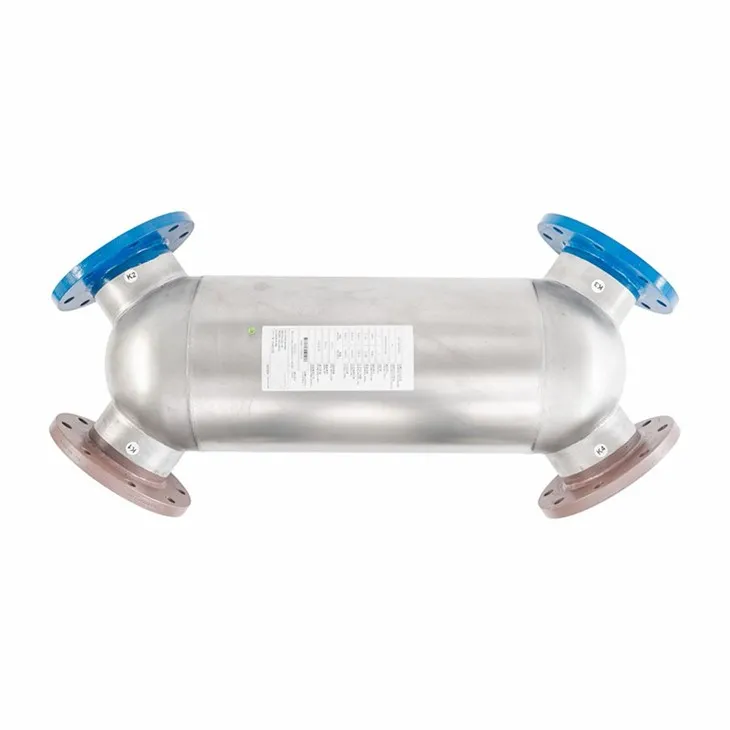

Natural convection occurs when a fluid is heated and becomes less dense, causing it to rise. As it rises, cooler fluid moves in to take its place, creating a natural circulation pattern. In a heat exchanger, natural convection can happen when the hot fluid heats the surrounding fluid, causing it to rise and creating a flow.
Forced convection, on the other hand, is when the fluid is forced to move by an external means, like a pump or a fan. In most chemical heat exchangers, forced convection is used because it allows for more control over the heat transfer process. The pump circulates the hot and cold fluids through the heat exchanger, ensuring that there's a continuous flow of fluid and a more efficient transfer of heat.
The heat transfer coefficient is an important factor in convection. It represents how well the fluid can transfer heat to or from the surface of the tube or plate. The heat transfer coefficient depends on things like the fluid's properties (such as its viscosity and thermal conductivity), the flow rate, and the geometry of the heat exchanger.
Radiation
Radiation is the third heat transfer mechanism, although it's usually less significant in chemical heat exchangers compared to conduction and convection. Radiation is the transfer of heat through electromagnetic waves. All objects emit thermal radiation, and the amount of radiation depends on the object's temperature and its emissivity.
In a heat exchanger, radiation can occur between the hot and cold fluids if there's a significant temperature difference and if the fluids are transparent to the radiation. However, in most cases, the heat transfer by radiation is small compared to conduction and convection, especially when the fluids are flowing through tubes or plates.
How These Mechanisms Work Together
In a real - world chemical heat exchanger, these three heat transfer mechanisms work together. Conduction transfers heat through the solid walls of the heat exchanger, while convection moves the heat within the fluids. Radiation, although usually a minor player, can still contribute to the overall heat transfer.
Let's take a look at a Carbon Steel Tubular Shell and Tube Heat Exchanger as an example. The hot fluid flows through the tubes, and the cold fluid flows around the tubes in the shell. Heat is conducted through the tube walls from the hot fluid to the cold fluid. At the same time, convection is happening within both the hot and cold fluids. The pump ensures that the fluids are flowing at the right rate, which maximizes the heat transfer by convection.
Another example is a Condenser. In a condenser, a vapor is cooled and condensed into a liquid. Conduction occurs through the walls of the condenser tubes, while convection moves the vapor and the condensate. The efficient transfer of heat is crucial to ensure that the vapor condenses quickly and effectively.
And if you're in an industry where hygiene is a top priority, a Sanitaty Heat Exchanger might be the right choice. These heat exchangers are designed to meet strict sanitary standards, and they also rely on the same heat transfer mechanisms of conduction, convection, and radiation to transfer heat between the fluids.
Importance of Understanding Heat Transfer Mechanisms
Understanding these heat transfer mechanisms is super important for several reasons. Firstly, it helps in the design of heat exchangers. By knowing how conduction, convection, and radiation work, engineers can choose the right materials, the right geometry, and the right flow rates to optimize the heat transfer process.
Secondly, it's crucial for troubleshooting. If a heat exchanger isn't performing as expected, understanding the heat transfer mechanisms can help identify the problem. For example, if the heat transfer rate is lower than normal, it could be due to a decrease in the convection flow rate or a problem with the conduction through the tube walls.
Finally, it's important for energy efficiency. By maximizing the heat transfer efficiency, we can reduce the amount of energy needed to heat or cool the fluids. This not only saves money but also has a positive impact on the environment.
Contact Us for Your Heat Exchanger Needs
If you're in the chemical industry and you're looking for a high - quality heat exchanger, we're here to help. Whether you need a Carbon Steel Tubular Shell and Tube Heat Exchanger, a Condenser, or a Sanitaty Heat Exchanger, we've got a wide range of options to meet your specific requirements.
We understand the importance of heat transfer mechanisms, and our heat exchangers are designed to make the most of conduction, convection, and radiation. So, don't hesitate to reach out and start a conversation about your heat exchanger needs. Let's work together to find the perfect solution for your chemical processes.
References
- Incropera, F. P., & DeWitt, D. P. (2002). Fundamentals of Heat and Mass Transfer. John Wiley & Sons.
- Holman, J. P. (2002). Heat Transfer. McGraw - Hill.