

Plastic heat exchangers have emerged as a significant innovation in the field of heat transfer technology. As a leading supplier of plastic heat exchangers, I am often asked about the weight characteristics of these devices. In this blog post, I will delve into the weight aspects of plastic heat exchangers, exploring their advantages, influencing factors, and how they compare to other types of heat exchangers.
Advantages of Lightweight Design
One of the most prominent features of plastic heat exchangers is their relatively low weight compared to traditional metal heat exchangers. This lightweight nature brings several benefits in various applications.
First and foremost, ease of installation is a major advantage. In industrial settings, where large - scale heat exchangers are often required, the lower weight simplifies the installation process. Workers can handle plastic heat exchangers more easily, reducing the need for heavy - duty lifting equipment and potentially minimizing installation time and costs. For example, in a chemical plant where multiple heat exchangers need to be installed in a limited space, the lightweight plastic heat exchangers can be maneuvered into position with greater ease than their metal counterparts.
Another benefit is related to transportation. Shipping heavy metal heat exchangers can be costly due to high freight charges based on weight. Plastic heat exchangers, on the other hand, significantly reduce these transportation costs. This is especially important for international suppliers, as it allows for more cost - effective distribution of products across the globe. For instance, when exporting heat exchangers to overseas markets, the lower weight of plastic heat exchangers can lead to substantial savings in shipping fees.
In applications where weight is a critical factor, such as in mobile or portable systems, plastic heat exchangers are the ideal choice. In the automotive industry, for example, reducing the weight of components is crucial for improving fuel efficiency and overall vehicle performance. Plastic heat exchangers can be used in engine cooling systems or climate control units, contributing to the overall weight reduction of the vehicle. Similarly, in aerospace applications, where every gram counts, the lightweight nature of plastic heat exchangers makes them suitable for use in aircraft environmental control systems.
Factors Influencing the Weight of Plastic Heat Exchangers
The weight of plastic heat exchangers is influenced by several factors, and understanding these can help in optimizing their design for specific applications.
Material Selection
The type of plastic used in the heat exchanger plays a significant role in determining its weight. Different plastics have different densities, which directly affect the overall mass of the heat exchanger. For example, polypropylene is a commonly used plastic in heat exchangers due to its good chemical resistance and relatively low density. It is lighter than some engineering plastics such as polycarbonate, which has a higher density. When choosing a plastic material, engineers need to balance the requirements of chemical resistance, thermal conductivity, and mechanical strength with the desired weight characteristics.
Design and Geometry
The design and geometry of the heat exchanger also impact its weight. A heat exchanger with a more complex design, such as one with a large number of fins or intricate flow channels, may require more material and thus be heavier. However, a well - designed heat exchanger can achieve high heat transfer efficiency with a relatively simple structure, reducing the amount of plastic material needed. For example, a shell - and - tube plastic heat exchanger Shell and Tube Plastic Heat Exchanger with an optimized tube arrangement and shell size can provide efficient heat transfer while keeping the weight to a minimum.
Heat Transfer Requirements
The required heat transfer rate is another important factor. Higher heat transfer rates generally require larger heat transfer areas, which may result in a heavier heat exchanger. To meet the heat transfer requirements while minimizing weight, advanced heat transfer enhancement techniques can be employed. For instance, using micro - structured surfaces or enhanced flow patterns can increase the heat transfer coefficient without significantly increasing the size or weight of the heat exchanger.
Comparison with Other Types of Heat Exchangers
When comparing plastic heat exchangers with other types, such as metal and silicon carbide heat exchangers, the weight differences are quite evident.
Metal Heat Exchangers
Metal heat exchangers, typically made of materials like copper, aluminum, or stainless steel, are generally much heavier than plastic heat exchangers. Metals have high densities, which contribute to the overall mass of the heat exchanger. For example, a copper heat exchanger can be several times heavier than a plastic heat exchanger of similar size and heat transfer capacity. While metal heat exchangers often have excellent thermal conductivity, their heavy weight can be a drawback in many applications, especially those where weight reduction is a priority.
Silicon Carbide Heat Exchangers
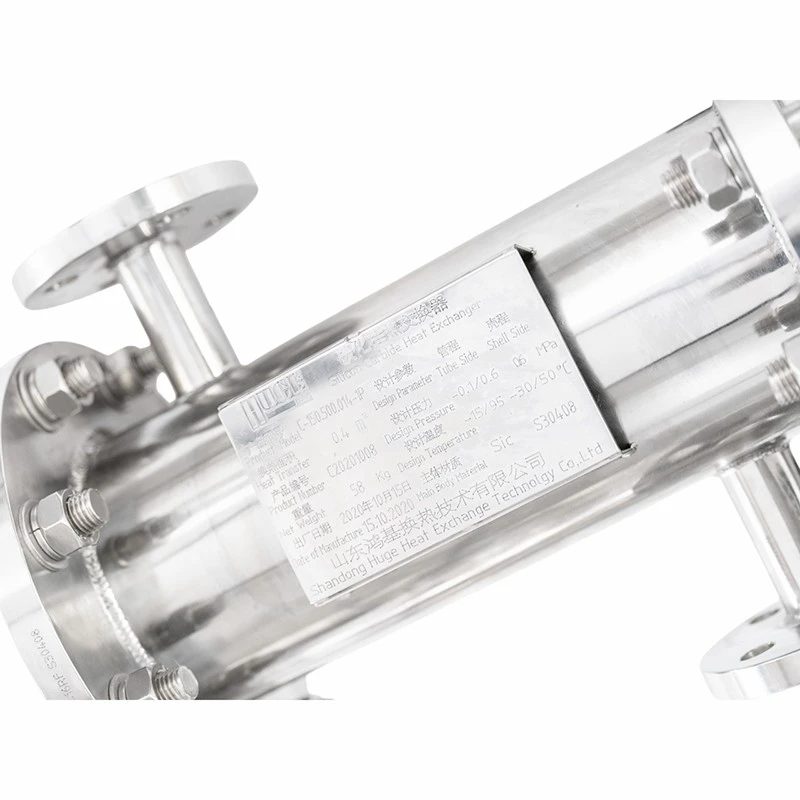
Silicon carbide heat exchangers Silicon Carbide Heat Exchanger are known for their high thermal conductivity and excellent chemical resistance. However, they are also relatively heavy compared to plastic heat exchangers. Silicon carbide has a higher density than most plastics, and the manufacturing process of silicon carbide heat exchangers often results in a more substantial structure. For example, a Silicon Carbide Shell and Tube Heat Exchanger will typically be heavier than a plastic shell - and - tube heat exchanger with similar dimensions.
Conclusion and Call to Action
In conclusion, the weight characteristics of plastic heat exchangers offer numerous advantages, including ease of installation, reduced transportation costs, and suitability for weight - sensitive applications. By understanding the factors that influence their weight and comparing them with other types of heat exchangers, customers can make informed decisions when selecting the most appropriate heat exchanger for their needs.
As a trusted supplier of plastic heat exchangers, we are committed to providing high - quality products that meet the diverse requirements of our customers. Whether you are looking for a lightweight solution for a mobile application or a cost - effective option for industrial use, our plastic heat exchangers are designed to deliver optimal performance. If you are interested in learning more about our plastic heat exchangers or would like to discuss your specific requirements, please feel free to contact us for a procurement discussion.

References
- Incropera, F. P., & DeWitt, D. P. (2002). Fundamentals of Heat and Mass Transfer. Wiley.
- Shah, R. K., & Sekulic, D. P. (2003). Fundamentals of Heat Exchanger Design. Wiley.