

Hey there! As a supplier of CIP (Clean-in-Place) Systems, I've seen firsthand how crucial it is for these systems to handle different levels of soil effectively. In this blog, I'll break down how our CIP System tackles various soil challenges, from light surface dirt to heavy, stubborn grime.

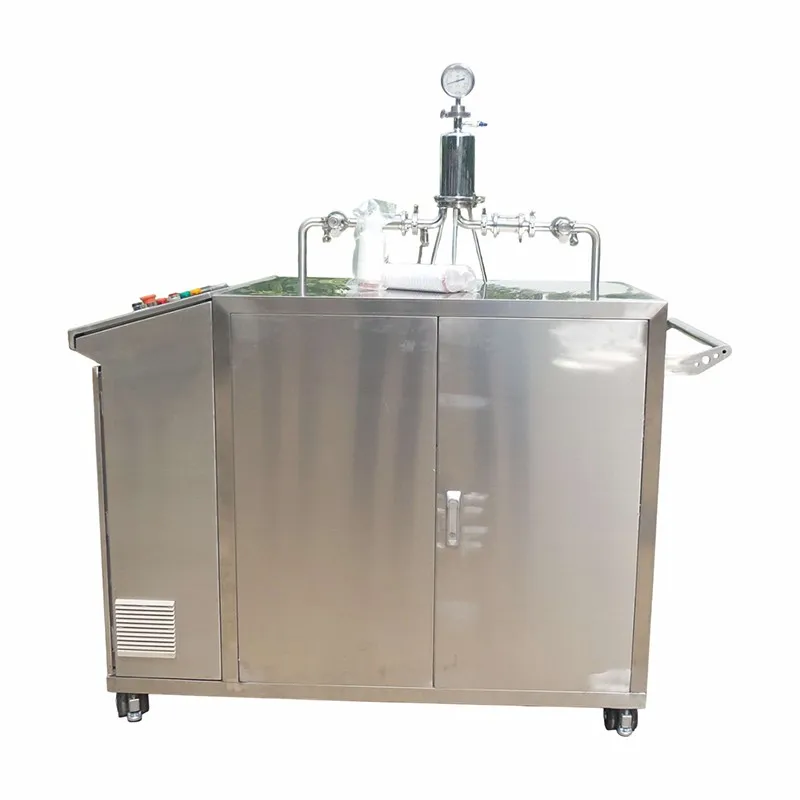
Understanding Soil Levels
Before we dive into how the CIP System deals with different soil levels, let's quickly understand what we mean by soil in this context. Soil can refer to any unwanted substance on the surfaces of equipment, such as food residues, chemicals, or biological contaminants. These substances can vary in quantity, composition, and adherence to the surfaces, which is why we classify them into different levels.
Light Soil
Light soil typically consists of thin layers of loosely attached substances. This could be a thin film of oil, a light dusting of powder, or a small amount of residual liquid. Light soil is relatively easy to remove because it doesn't have a strong bond with the equipment surface. For example, in a food processing plant, after a short production run of a low - viscosity product, there might be a light coating of the product on the inner walls of the pipes.
Medium Soil
Medium soil is a bit more challenging. It usually involves thicker layers of substances that are more firmly attached to the surface. This could be a build - up of food particles that have started to dry and adhere, or a chemical residue that has reacted with the equipment surface to some extent. In a brewery, for instance, after a few batches of brewing, there might be a medium level of yeast and hop residues on the fermentation tanks.
Heavy Soil
Heavy soil is the toughest to deal with. It consists of thick, stubborn deposits that are strongly bonded to the equipment surface. This could be baked - on food residues in an oven, or a thick layer of scale and corrosion in a chemical processing vessel. Heavy soil often requires more aggressive cleaning methods and longer cleaning cycles.
How the CIP System Handles Light Soil
Our CIP System is designed to be highly efficient even when dealing with light soil. The first step is usually a pre - rinse. This involves flushing the equipment with a large volume of water at a relatively low pressure. The water helps to dislodge and remove the loosely attached light soil. It's like giving the equipment a quick shower to get rid of the surface dirt.
After the pre - rinse, a mild cleaning solution is introduced. This solution is formulated to break down the remaining light soil. It contains surfactants that reduce the surface tension of the soil, making it easier to wash away. The cleaning solution is circulated through the equipment for a short period, typically 5 - 10 minutes.
Finally, a post - rinse is carried out to remove any remaining cleaning solution and loosened soil. The post - rinse uses clean water to ensure that the equipment is left clean and ready for the next production cycle. This simple yet effective process ensures that light soil is completely removed without causing any damage to the equipment.
Dealing with Medium Soil
When it comes to medium soil, our CIP System ramps up its cleaning power. The pre - rinse is still an important first step, but this time, the water pressure might be increased slightly to help dislodge the more firmly attached soil.
The cleaning solution used for medium soil is more concentrated and contains stronger detergents. These detergents are specifically designed to break down the complex organic and inorganic substances that make up medium soil. The cleaning solution is circulated through the equipment for a longer period, usually 15 - 20 minutes, to allow it to penetrate and dissolve the soil.
In some cases, we might also use elevated temperatures to enhance the cleaning process. Heating the cleaning solution can increase the chemical reaction rate between the detergent and the soil, making the cleaning more effective. After the cleaning cycle, a thorough post - rinse is carried out to remove all traces of the cleaning solution and soil.
Tackling Heavy Soil
Heavy soil requires a more comprehensive approach. The pre - rinse is often more intense, with higher water pressure and longer duration. This helps to remove as much of the loose outer layer of the heavy soil as possible.
For the cleaning solution, we use a highly concentrated and specialized formula. These solutions may contain strong alkalis or acids depending on the nature of the heavy soil. For example, if the heavy soil is a scale deposit mainly composed of calcium carbonate, an acidic cleaning solution would be used to dissolve it.
The cleaning cycle for heavy soil is much longer, sometimes up to an hour or more. During this time, the cleaning solution is circulated at a high pressure and temperature to ensure maximum contact with the soil and to break down the strong bonds between the soil and the equipment surface.
In addition to the standard cleaning steps, we might also incorporate mechanical agitation. This can be achieved through the use of rotating spray balls or jets within the equipment. The mechanical agitation helps to physically break up the heavy soil and improve the cleaning efficiency.
The Role of Automation in Handling Different Soil Levels
One of the key advantages of our CIP System is its automation capabilities. The system can be programmed to adjust the cleaning parameters based on the level of soil detected. For example, sensors can be installed in the equipment to measure the turbidity of the rinse water. If the turbidity is high, indicating a higher level of soil, the system can automatically increase the cleaning time, the concentration of the cleaning solution, or the water pressure.
This automation not only ensures consistent and effective cleaning but also saves time and resources. It eliminates the need for manual adjustment of the cleaning process, reducing the risk of human error.
Related Systems and Their Complementary Roles
In addition to our CIP System, we also offer other related systems that can work in tandem to ensure a comprehensive cleaning solution. The SIP System, or Sterilization - in - Place System, can be used after the CIP process to sterilize the equipment and eliminate any remaining microorganisms. This is especially important in industries such as pharmaceuticals and food processing, where product safety is of utmost importance.
Our Filter Cleaning System is another valuable addition. Filters can become clogged with soil during the production process, and a dedicated filter cleaning system can ensure that the filters are cleaned effectively, maintaining their performance and extending their lifespan.
Conclusion
As you can see, our CIP System is a versatile and powerful tool for handling different levels of soil. Whether it's light, medium, or heavy soil, the system is designed to provide efficient and effective cleaning solutions. The combination of pre - rinse, cleaning solution application, post - rinse, and automation ensures that the equipment is thoroughly cleaned, while the related systems like the SIP System and Filter Cleaning System offer additional benefits for a complete cleaning and maintenance solution.
If you're looking for a reliable CIP System for your business, whether it's in food processing, pharmaceuticals, or any other industry that requires clean equipment, we'd love to have a chat with you. Our team of experts can help you determine the best cleaning solution for your specific needs. Contact us today to start the conversation about purchasing and customizing a CIP System that's right for you.
References
- "Cleaning in Place: Principles and Practice" by John H. Scargill
- "Food Plant Sanitation" by Douglas L. Marshall